61% of Companies Are Doing This With Contacts Right Now Are You Behind?

Most businesses think they have their contacts “under control.” Numbers are saved, chats are active, and conversations are happening daily. But behind the scenes, something very different is happening.
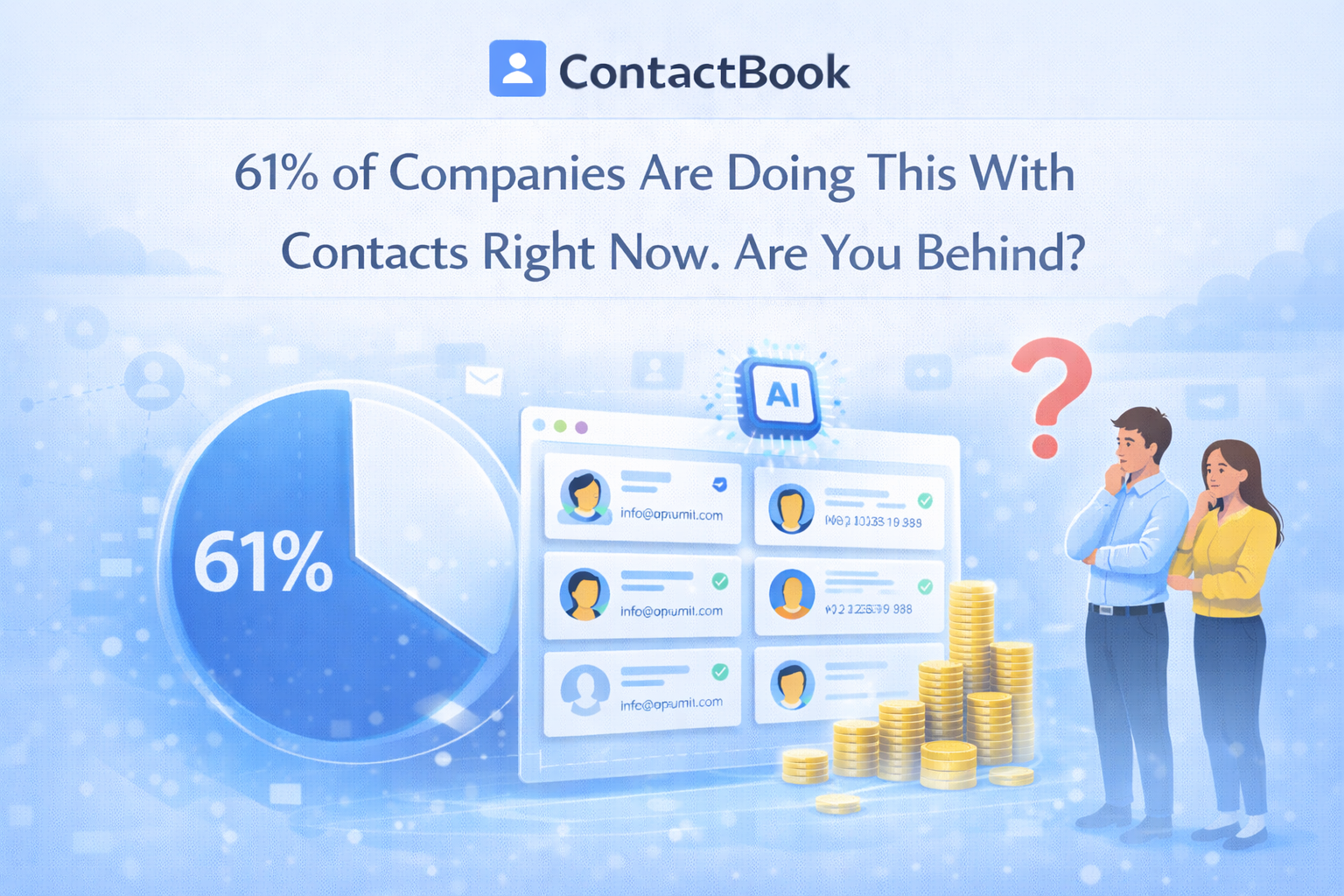
A growing number of companies are no longer just storing contacts they are actively managing, organizing, and using them as a core business asset. In fact, a majority of modern businesses have already shifted toward structured contact systems to improve efficiency, follow-ups, and conversions.
So the real question is: are you still just saving contacts, or are you actually managing them?
If your contacts are scattered across WhatsApp, spreadsheets, and phones without a system, you might already be falling behind. Let’s break down what leading companies are doing differently and how you can catch up.
The Shift: Contacts Are No Longer Just Phone Numbers
Businesses used to treat contacts as simple entries — a name and a number. But today, contacts have evolved into something much more powerful.
Contacts Are Now Business Assets
Modern companies treat contacts as valuable data points. Each contact represents a potential opportunity. Managing them properly directly impacts revenue.
Information Matters More Than Just Numbers
It’s no longer enough to save a number. Companies now track details like source, interest, and behavior. This makes every contact more useful.
Contacts Drive Decision Making
With structured contact data, businesses can identify patterns. They know which leads convert better. This helps in smarter planning.
Communication Is Becoming Data-Driven
Instead of random replies, companies use contact insights to guide conversations. This improves engagement and results.
The shift is clear — contacts are no longer passive. They are actively used to drive growth.
What 61% of Companies Are Doing Differently
A majority of businesses have moved beyond basic contact storage. They follow structured systems that improve efficiency and performance.
They Organize Contacts in One Place
Instead of scattered data, they use centralized systems. This ensures all contact information is accessible. It eliminates confusion.
They Segment Contacts by Category
Contacts are grouped based on type, stage, or interest. This allows targeted communication. It also improves follow-ups.
They Track Every Interaction
Every conversation is recorded and accessible. This helps maintain context. Teams don’t need to rely on memory.
They Prioritize Follow-Ups
Companies actively track which contacts need attention. This ensures no lead is ignored. Follow-ups become consistent.
They Use Contacts for Long-Term Growth
Instead of one-time interactions, they build relationships. Contacts are nurtured over time. This increases lifetime value.
This structured approach is what sets them apart.
Signs You Might Be Falling Behind
Many businesses don’t realize they are behind until problems start affecting growth. If your contact management feels chaotic, it’s a clear signal.
You Struggle to Find Contacts
If you often search through chats or call logs, your system isn’t working. This wastes time and slows responses.
You Forget Important Conversations
Not remembering what a customer asked is a common issue. This leads to repeated questions and poor experience.
Follow-Ups Are Inconsistent
If you rely on memory for follow-ups, leads will be missed. This directly impacts conversions.
Contacts Are Saved Randomly
Unstructured naming makes it difficult to identify contacts. Over time, your list becomes messy.
Your Team Isn’t Aligned
If multiple people handle contacts without shared data, confusion increases. This affects communication quality.
If any of these sound familiar, it’s time to rethink your approach.
Why Structured Contact Management Is Winning
Companies that organize their contacts properly gain a significant advantage. They work smarter, not harder.
Faster Response Time
With organized contacts, you instantly know who you’re talking to. This speeds up communication.
Better Customer Experience
When you remember details, customers feel valued. This builds trust and loyalty.
Higher Conversion Rates
Structured follow-ups ensure leads are not lost. This improves sales performance.
Improved Team Efficiency
Teams work with clear information. This reduces confusion and saves time.
Scalable Growth
A proper system allows you to handle more contacts without chaos. This supports business expansion.
Contact management is no longer optional, it’s a competitive advantage.
What a Modern Contact System Looks Like
If 61% of companies are ahead, what exactly are they using? A modern contact system goes beyond just saving numbers.
Centralized Contact Storage
All contacts are stored in one place. This eliminates fragmentation. Everything becomes accessible.
Smart Categorization
Contacts are tagged based on type and stage. This improves organization. Filtering becomes easy.
Context and Notes
Every contact includes relevant details. This helps in understanding conversations instantly.
Follow-Up Tracking
The system tracks pending actions. This ensures consistency. No lead is forgotten.
Easy Search and Access
Contacts can be found instantly. This improves productivity. Teams work faster.
These features turn contacts into a structured business resource.
How to Catch Up Without Overcomplicating Things
You don’t need a complex system to start improving. Small changes can make a big difference.
Start With Proper Naming
Use a consistent naming format. Include context like source or category. This improves clarity.
Segment Your Contacts
Group contacts based on stage or type. This helps prioritize communication. It reduces confusion.
Track Basic Information
Store key details like interest and requirements. This improves conversations. You don’t need to rely on memory.
Create a Follow-Up Habit
Regular follow-ups increase conversions. Keep track of pending contacts. Consistency matters.
Keep Everything in One Place
Avoid scattered data across apps. Centralization improves efficiency. It simplifies management.
These steps help you move toward a structured system quickly.
The Real Advantage: Relationships Over Random Outreach
Businesses that manage contacts properly focus on relationships instead of random communication.
Stronger Customer Connections
When you remember details, interactions feel personal. This builds trust over time.
Increased Repeat Business
Satisfied customers return more often. Managing contacts helps maintain these relationships.
Better Referrals
Happy customers refer others. A structured system helps you track and nurture these connections.
Consistent Communication
Regular follow-ups keep your business top of mind. This improves engagement.
Relationships create long-term growth, not just one-time sales.
Final Thoughts
The way businesses handle contacts is changing rapidly. What used to be a simple phonebook is now a powerful business tool. Companies that understand this are already ahead and that’s why 61% are investing in structured contact management.
If your contacts are unorganized, incomplete, or scattered, you’re not just dealing with inconvenience — you’re losing opportunities. Every missed follow-up, every forgotten conversation, and every duplicate contact affects your growth.
The good news is that it’s never too late to improve. By organizing contacts, tracking interactions, and building a simple system, you can quickly catch up and even get ahead.
The question isn’t whether contact management matters anymore. It’s whether you’re ready to take it seriously — or risk falling behind.

.png)


.svg)


.svg)