How BNI Members Manage Follow-Ups With 40+ Weekly Referral Contacts

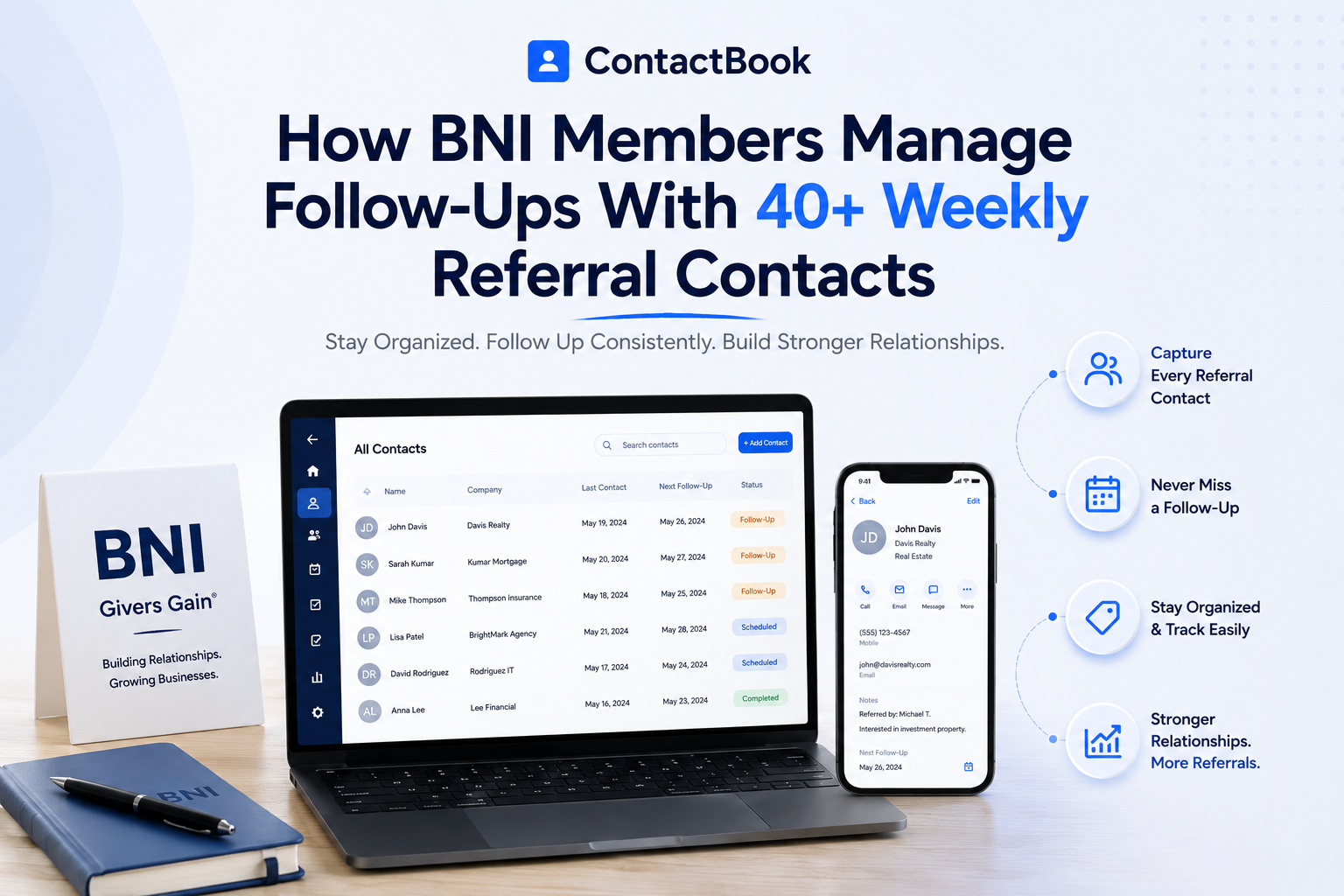
BNI members know the feeling.
You attend the weekly meeting. You meet visitors. You exchange referrals. You schedule a few 1-2-1s. Someone introduces you to a potential client. Another member shares a vendor contact. A visitor asks for your card. You promise to follow up with three people after the meeting.
By the end of the week, you may have 40 or more new or active referral-related contacts to manage.
That sounds like a good problem to have.
But if those contacts are scattered across WhatsApp, business cards, Gmail, Google Contacts, phone notes, spreadsheets, LinkedIn, and memory, good referrals can quietly turn into missed opportunities.
BNI is built around trusted relationships and referral networking. BNI describes itself as the world’s largest referral networking organization, with members meeting weekly to pass referrals and grow business through trusted connections.
The system works when relationships are followed up properly.
The problem is that many professionals are great at networking but not always great at managing the contact flow that comes after networking.
That is where a simple contact management system can make a major difference.
For BNI members, follow-up is not an admin task.
It is where the referral becomes revenue.
Why Follow-Up Matters So Much for BNI Members
BNI is not casual networking.
It is structured, relationship-driven referral marketing. Members meet regularly, build trust, understand each other’s businesses, and pass referrals when they see real opportunities.
BNI India describes the model as a proven system of referral marketing where like-minded professionals come together to help each other grow. It also highlights that weekly local chapter meetings follow a structured agenda designed to maximize referrals.
That structure creates opportunity.
But opportunity still needs follow-up.
A referral is not closed business. A visitor is not automatically a client. A 1-2-1 is not valuable unless the next step happens. A business card is not useful if it stays in your wallet.
The real value appears after the meeting, when you act on the contact.
The Hidden Follow-Up Problem
Most BNI members do not lose opportunities because they do not care.
They lose opportunities because their contacts are spread everywhere.
One referral is saved in WhatsApp. One visitor’s number is on a business card. One member’s introduction is in Gmail. One follow-up reminder is in your head. One prospect’s details are in BNI Connect. One 1-2-1 note is in a notebook.
Individually, each detail feels manageable.
Together, they become chaos.
When you handle 40+ referral-related contacts every week, your memory is not a system.
The 40+ Weekly Contact Reality
A busy BNI member may interact with far more contacts than they realize.
There are chapter members, visitors, substitutes, referrals received, referrals given, 1-2-1 meeting contacts, past referrals, event contacts, potential collaborators, strategic partners, and prospects introduced by other members.
Even if only a few of these contacts are new each week, the number of active follow-ups grows quickly.
Referral Contacts Are Different From Normal Leads
A referral contact is more valuable than a cold lead because trust is already involved.
Someone has connected you, recommended you, or opened the door. That means your follow-up carries responsibility.
If you delay too long, it reflects on you and the person who referred you. If you forget the context, the conversation becomes awkward. If you fail to update the referrer, they may hesitate to refer again.
That is why referral contacts need better organization than a regular address book can provide.
BNI Follow-Ups Need Context
A good follow-up is not just, “Hi, nice to meet you.”
It should include who introduced you, why the connection matters, what the person needs, what was discussed, and what the next step should be.
Without that context, every contact becomes just another name.
With context, the follow-up becomes personal, relevant, and easier to act on.
Why Spreadsheets and Phone Contacts Are Not Enough
Many BNI members start with simple tools.
They save numbers in their phone. They add names to Google Contacts. They keep a spreadsheet of referrals. They write notes after meetings. They use WhatsApp stars, email flags, or calendar reminders.
That can work for a few contacts.
It breaks when the contact volume grows.
Phone Contacts Become Messy Fast
Your phone contact list was not built to manage referral relationships.
You can save a name and number, but it is hard to track the source, meeting date, referrer, follow-up status, notes, tags, and relationship type.
After a few months, you may have hundreds of business contacts with no clear system.
Spreadsheets Create Version Confusion
Spreadsheets are flexible, but they are not ideal for live follow-ups.
You have to manually update every field. You may forget to add notes. You may not open the sheet every day. It is hard to use on mobile during meetings. And if you collaborate with a team, version control becomes difficult.
A spreadsheet stores referral data.
It does not help you act on it.
Memory Is the Most Expensive System
The most dangerous system is memory.
BNI members often remember strong referrals immediately after a meeting. But after calls, client work, family commitments, more meetings, and another weekly chapter session, small details disappear.
The referral may still be in your phone.
But the reason for the referral is gone.
What BNI Members Actually Need in a Follow-Up System
A strong BNI follow-up system does not have to be complicated.
It simply needs to help you capture contacts quickly, organize them clearly, remember context, and take the next step on time.
One Place for Every Referral Contact
The first requirement is centralization.
Every referral, visitor, 1-2-1 contact, member contact, and prospect should live in one organized system. That does not mean you stop using WhatsApp, Gmail, or your phone. It means your final contact record should not be scattered across all of them.
ContactBook is built around this idea. It helps users manage contacts from one place, access them across web and mobile, share contacts with teams, organize contacts with tags, add notes, set reminders, and manage contacts without CRM complexity.
For BNI members, this means every relationship can have a proper home.
Tags That Match the BNI Workflow
Tags are one of the simplest ways to organize referral contacts.
Instead of saving everyone as a normal contact, you can tag people by relationship and action.
Useful BNI tags might include “Referral Received,” “Referral Given,” “Visitor,” “1-2-1 Pending,” “Follow Up This Week,” “Hot Prospect,” “Chapter Member,” “Strategic Partner,” or “Thank You Pending.”
This makes it much easier to filter your contacts at the end of the week and know exactly who needs attention.
Notes That Preserve Relationship Context
The most important part of a referral contact is often not the phone number.
It is the story.
Who referred them? What do they need? What pain point did they mention? Are they ready to buy now or later? What did the BNI member say about them? What should you avoid? What did you promise to send?
Adding notes after every meaningful interaction prevents context from disappearing.
A simple note like “Referred by Amit from chapter meeting. Needs website redesign after April. Send portfolio and call Friday” is enough to make the follow-up stronger.
Reminders That Prevent Missed Opportunities
Follow-up timing matters.
Some contacts need a same-day call. Some need a message after the meeting. Some need a reminder next week. Some need a check-in after a quote. Some need a thank-you update to the referring member.
A proper contact system should let you set reminders directly on the contact, not separately in a random calendar entry.
That way, the reminder and the relationship stay connected.
A Simple Weekly Follow-Up System for BNI Members
Here is a practical system BNI members can use every week.
Before the Weekly Meeting
Before the meeting, review your active referral contacts.
Check who still needs a follow-up, who needs an update, who may be ready for a 1-2-1, and which referral outcomes should be reported back.
This helps you walk into the meeting prepared, not reactive.
You can also review your tags, such as “Follow Up This Week” or “Thank You Pending,” so you know what conversations need attention.
During the Meeting
During the meeting, capture contacts immediately.
If you meet a visitor, receive a referral, schedule a 1-2-1, or promise to share someone’s details, do not wait until later. Save the contact, add the right tag, and write a short note while the context is fresh.
This is where mobile contact management becomes powerful.
Instead of collecting business cards and hoping you remember them later, save and organize the contact in the moment.
After the Meeting
The first few hours after the meeting are critical.
This is when referrals are still warm and people still remember the conversation.
Send the first message, schedule the call, add the next reminder, and update your notes. If someone referred you, acknowledge it quickly and keep them informed.
A fast follow-up shows professionalism.
A forgotten follow-up weakens trust.
End of the Week
At the end of the week, review your contact tags.
Look at referrals received, referrals given, visitors, 1-2-1s, pending follow-ups, and closed opportunities. Clean up notes, update contact status, and prepare for the next chapter meeting.
This weekly review turns networking into a repeatable business system.
How ContactBook Helps BNI Members Stay Organized
BNI members do not need a complicated CRM for every relationship.
Many need a simple, reliable contact management system that works around how they already network.
ContactBook is useful because it focuses on contacts first.
Capture Contacts From Meetings, Cards, Gmail, and Social Platforms
BNI members meet people in many places.
Chapter meetings, visitor days, business mixers, WhatsApp groups, email introductions, LinkedIn messages, and 1-2-1s all create contacts.
ContactBook supports contact importing and contact capture across multiple workflows, including Gmail, Google Contacts, mobile, Chrome extension, and business card scanning. That makes it easier to bring referral contacts into one place instead of leaving them scattered.
Organize Referral Contacts With Groups and Tags
A BNI member may want separate groups for chapter members, visitors, referral partners, prospects, clients, vendors, and strategic alliances.
ContactBook allows contacts to be organized with groups and tags, which makes filtering and follow-up easier.
This is especially useful when you handle contacts from multiple chapters, events, or business categories.
Add Notes and Reminders for Every Referral
ContactBook lets users add notes and reminders to contacts, helping members track what was discussed and what needs to happen next.
This is a major advantage for referral follow-ups.
You do not have to remember every promise. The contact record remembers it for you.
Share Contacts With Your Team
Many BNI members are business owners with teams.
A member may attend the meeting, but their sales assistant, operations manager, or partner may need to follow up.
ContactBook supports shared contact groups and permission-based collaboration, so the right team members can access the right contacts without everyone working from separate lists.
That is useful when referrals need to be handled by someone else in the business.
Reduce Duplicate and Outdated Contacts
Referral networks create repeated introductions.
You may meet the same person at a chapter meeting, a visitor day, an event, and through another member.
Without cleanup, duplicate contacts appear quickly.
A better contact system helps reduce duplicate records and keeps details easier to trust.
ContactBook vs CRM for BNI Members
Some BNI members use a CRM, and that can make sense.
If your business has a full sales pipeline, multiple sales reps, deal stages, revenue forecasting, and automation, a CRM may be useful.
But many BNI members do not need a heavy sales system for every referral contact.
They need something faster and simpler.
Choose a CRM If You Need Pipeline Management
A CRM makes sense if you track deals by stage, assign sales tasks to a team, forecast revenue, automate campaigns, and report on sales performance.
That is helpful for larger sales operations.
Choose ContactBook If You Need Relationship Follow-Up
ContactBook makes sense if your main problem is managing contacts, remembering context, organizing referrals, setting follow-up reminders, and sharing contacts with the right people.
For many BNI members, that is the real need.
The goal is not to create more admin work.
The goal is to make sure every referral gets handled properly.
Common Follow-Up Mistakes BNI Members Make
Even experienced networkers can lose opportunities because of small process gaps.
Waiting Too Long After a Referral
A referral is warm only for a limited time.
If you wait several days to reach out, the trust and urgency may fade.
The best practice is to follow up quickly and mention the person who made the introduction.
Forgetting to Update the Referrer
The member who referred you wants to know what happened.
A quick update builds trust and encourages future referrals.
For example, “Thanks for introducing me to Neha. We spoke today and scheduled a consultation for Monday.”
That one message strengthens the referral relationship.
Treating Every Contact the Same
A visitor, chapter member, hot referral, strategic partner, and cold prospect should not be managed the same way.
Tags and groups help you treat each contact according to their role in your network.
Not Tracking 1-2-1 Conversations
1-2-1 meetings are where deeper referral trust is built.
If you do not record key notes from those meetings, you may forget what kind of referrals someone wants or how you can help them.
Keeping Contacts in Personal Silos
If your team helps you with sales, scheduling, operations, or client service, they need access to the right contacts.
Keeping referral contacts only in your personal phone can slow the whole business down.
A Better Way to Think About BNI Contacts
BNI contacts are not just leads.
They are relationship assets.
A referral contact can become a client. A visitor can become a chapter member. A chapter member can become a long-term strategic partner. A past client can become a referral source. A 1-2-1 conversation can create future opportunities months later.
That is why BNI members need to manage contacts with more care than a simple phonebook allows.
The best members are not only good at meeting people.
They are good at remembering people, helping people, and following up when it matters.
A strong contact management system supports that behavior.
Final Thoughts
BNI can create a powerful flow of referrals, introductions, visitors, and business opportunities.
But the value of that network depends on what happens after the meeting.
When referral contacts are scattered across WhatsApp, Gmail, business cards, spreadsheets, Google Contacts, and memory, opportunities get lost. When contacts are organized with tags, notes, reminders, groups, and shared access, follow-up becomes easier and more professional.
ContactBook gives BNI members a simple way to manage referral contacts without turning networking into complicated CRM admin.
It helps members capture contacts, preserve context, set reminders, share contacts with teams, and keep every relationship easier to act on.
In BNI, referrals begin with trust.
But they grow through follow-up.
And the members who follow up best are the ones who turn more connections into real business.
FAQs
How should BNI members manage referral contacts?
BNI members should manage referral contacts in one centralized system with tags, notes, reminders, groups, and follow-up tracking. This helps prevent referrals from getting lost across phones, WhatsApp, email, and spreadsheets.
Why do BNI members need a contact management system?
BNI members often handle many referrals, visitors, 1-2-1 contacts, and business introductions every week. A contact management system helps organize those relationships and makes follow-up easier.
What is the best way to follow up after a BNI referral?
The best way is to follow up quickly, mention the person who made the introduction, add context from the referral, schedule the next step, and update the referrer after contact is made.
Can ContactBook help BNI members manage referrals?
Yes. ContactBook helps BNI members centralize contacts, organize them with groups and tags, add notes, set reminders, scan business cards, and share contacts with team members.
Is ContactBook better than a CRM for BNI members?
ContactBook is better if the main need is contact organization and follow-up management. A CRM may be better if the member needs full pipeline tracking, sales forecasting, and advanced automation.
How can BNI members avoid missing follow-ups?
BNI members can avoid missed follow-ups by tagging referral contacts, adding notes immediately after meetings, setting reminders, and reviewing pending contacts at the end of each week.
What tags should BNI members use for contacts?
Useful tags include Referral Received, Referral Given, Visitor, 1-2-1 Pending, Follow Up This Week, Hot Prospect, Strategic Partner, Chapter Member, and Thank You Pending.
Why is follow-up important in BNI?
Follow-up is important because a referral only becomes valuable when action is taken. Fast and professional follow-up builds trust with both the prospect and the member who gave the referral.

.png)


.svg)


.svg)