How to Start Building a Professional Network from Scratch in Under 60 Days

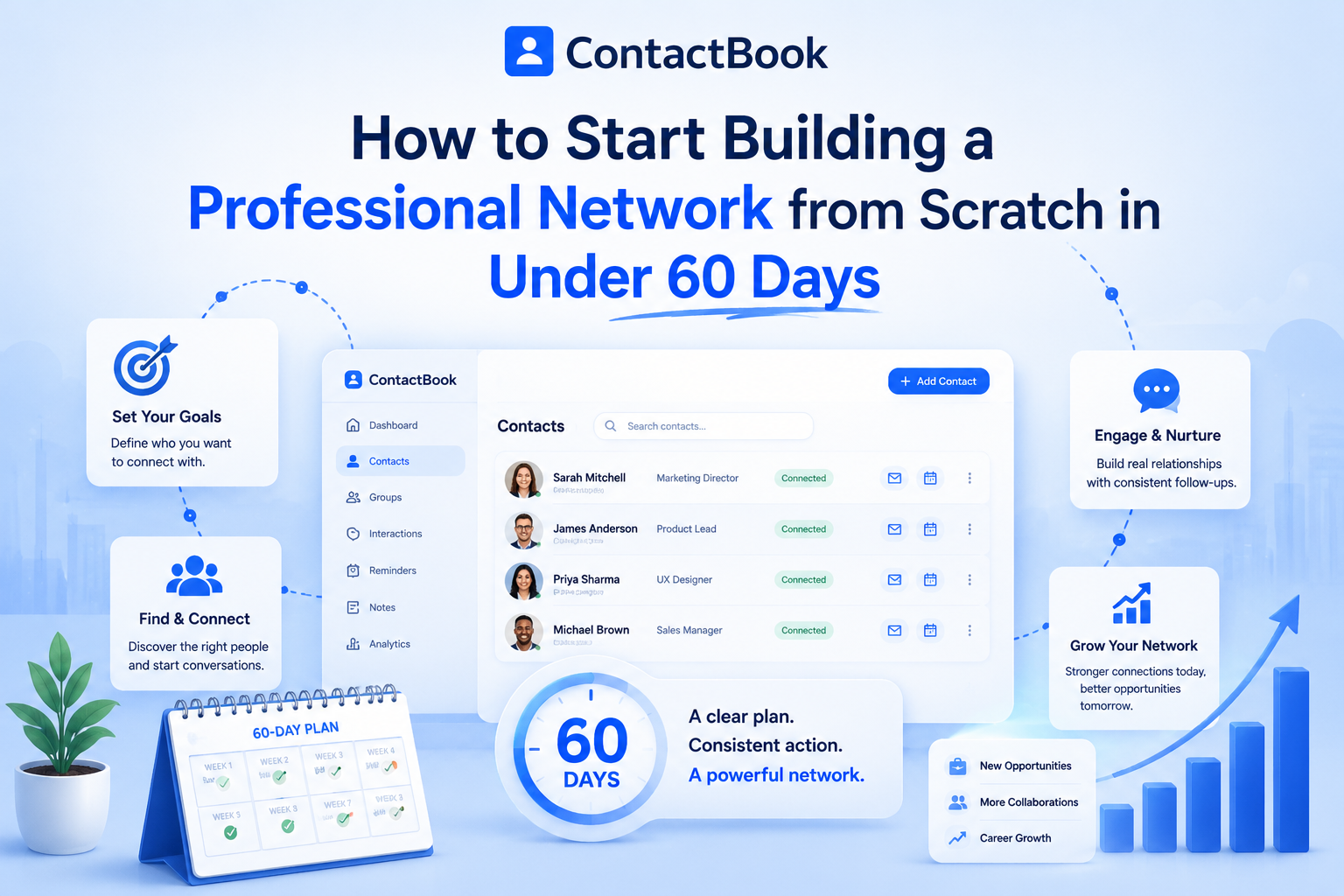
Building a professional network from scratch can feel challenging, especially if you are starting your career, changing industries, growing a business, or trying to find new clients. Many people think networking means knowing hundreds of people or attending every event. But real networking is not about collecting contacts. It is about building meaningful professional relationships one step at a time.
A strong professional network can help you discover new opportunities, get referrals, learn from experienced people, find clients, meet mentors, and grow your career or business. The good news is that you do not need years to get started. With a clear plan, consistent effort, and proper contact management, you can build a strong networking foundation in under 60 days.
Days 1–10: Define Your Networking Goal
Before you reach out to anyone, understand why you want to build a professional network. A clear goal helps you connect with the right people instead of randomly adding contacts.
Ask yourself what you want from your network. Are you looking for a job, clients, mentors, business partners, referrals, industry knowledge, or career growth? Your goal will decide the type of people you should connect with.
For example, if you are looking for a job, you may want to connect with recruiters, hiring managers, alumni, and professionals in your target industry. If you are growing a business, you may want to connect with potential clients, vendors, partners, investors, and referral sources.
During these first 10 days, create a simple list of your ideal contacts. Focus on quality over quantity. A smaller network built on trust and relevance is more valuable than a large list of people you never speak to.
Days 11–20: Start With People You Already Know
You may feel like you are starting from zero, but you probably already have more contacts than you realize. Your existing circle is the easiest and most natural place to begin.
Make a list of people from school, college, previous jobs, internships, events, online communities, family, friends, and LinkedIn. These people form the foundation of your professional network.
Start reconnecting with old contacts in a simple and genuine way. You can send a message asking how they are doing, sharing a short update about your work, or mentioning that you would like to stay connected professionally.
You do not need to ask for anything immediately. The goal is to reopen communication and rebuild the relationship naturally. Someone in your existing circle may also introduce you to a recruiter, client, mentor, investor, or business partner. Many strong networks grow through second-degree connections.
As you reconnect, save each contact’s details in one place. Add their name, email, phone number, company, job title, and notes about how you know them.
Days 21–30: Build a Strong Online Presence
Before connecting with new people, make sure your online presence clearly explains who you are and what you do. Your digital profile often works as your first impression.
Start by updating your LinkedIn profile. Add a clear profile photo, professional headline, short summary, work experience, skills, education, and contact details where appropriate. Your profile should quickly explain your background, interests, and the type of opportunities or conversations you are open to.
Keep your information consistent across LinkedIn, email signatures, personal websites, portfolios, and other professional platforms. Consistency makes you look more credible and easier to remember.
You can also share occasional updates about what you are learning, projects you are working on, industry insights, event takeaways, or useful resources. You do not need to post every day. Even one or two thoughtful updates can help people understand your interests and start conversations with you.
Days 31–40: Join Relevant Communities and Meet New People
Once your foundation is ready, start meeting new people in places where your ideal contacts already spend time.
Join communities related to your industry, goals, or interests. These may include LinkedIn groups, alumni networks, local business groups, startup communities, professional associations, online forums, webinars, or meetups.
Choose a few quality communities instead of joining too many at once. The goal is not just to be present, but to participate. Comment on discussions, ask thoughtful questions, attend sessions, and introduce yourself when appropriate.
You can also attend industry events, workshops, conferences, and networking meetups. Go in with the goal of having meaningful conversations, not collecting as many contacts as possible.
Before joining an event or community, prepare a simple introduction. For example:
“Hi, I’m Riya. I’m building my career in digital marketing and currently learning more about SEO and content strategy.”
After meeting someone, write down where you met, what you discussed, and any follow-up action. These notes will help you continue the conversation later in a personal way.
Days 41–50: Start Conversations and Follow Up
Networking becomes valuable when conversations continue beyond the first introduction. During this stage, focus on starting meaningful conversations and following up properly.
When reaching out to new people, avoid generic messages like “Hi” or “Let’s connect.” Instead, personalize your message. Mention where you met, a post they shared, a common interest, or something specific about their work.
For example:
“Hi Priya, I saw your recent post about client relationship management and found it very useful. I’m currently learning more about professional networking and would love to connect.”
Keep your message short, clear, and respectful. Do not immediately ask for a job, sale, referral, or introduction. Start with a thoughtful question or a genuine comment.
Follow up within a few days after meeting someone. Mention something specific from your conversation so they remember you. A simple follow-up can turn a short introduction into a real professional relationship.
Days 51–60: Organize, Nurture, and Manage Your Network
As your network grows, it becomes harder to remember every detail. Good organization helps you turn contacts into lasting relationships.
Store your contacts in one place instead of keeping them scattered across your phone, email, spreadsheets, business cards, LinkedIn, and social media accounts. Add notes about where you met, what you discussed, their interests, and when you should follow up.
Use tags and groups to organize contacts into categories such as recruiters, clients, mentors, event contacts, referral partners, vendors, investors, or industry peers. This makes it easier to find the right people when you need them.
Set follow-up reminders so important relationships do not fade away. Networking is not a one-time activity. You need to stay connected by sharing useful resources, congratulating people on achievements, supporting their work, or checking in occasionally.
This is where a tool like ContactBook can help. ContactBook allows you to organize contacts, create groups, add tags, save notes, attach files, set reminders, and manage your professional network in one place. This helps you stay consistent and build stronger relationships over time.
Final Thoughts
Building a professional network from scratch in under 60 days is possible when you follow a clear process. Start by defining your goal, reconnect with people you already know, improve your online presence, join relevant communities, start meaningful conversations, follow up consistently, and keep your contacts organized.
A strong network is not built by collecting names. It is built by nurturing relationships. With the right strategy and a proper contact management system, your network can support your career, business, and growth for years to come.

.png)


.svg)


.svg)