How to Build Strong Connections in 5 Minutes a Day

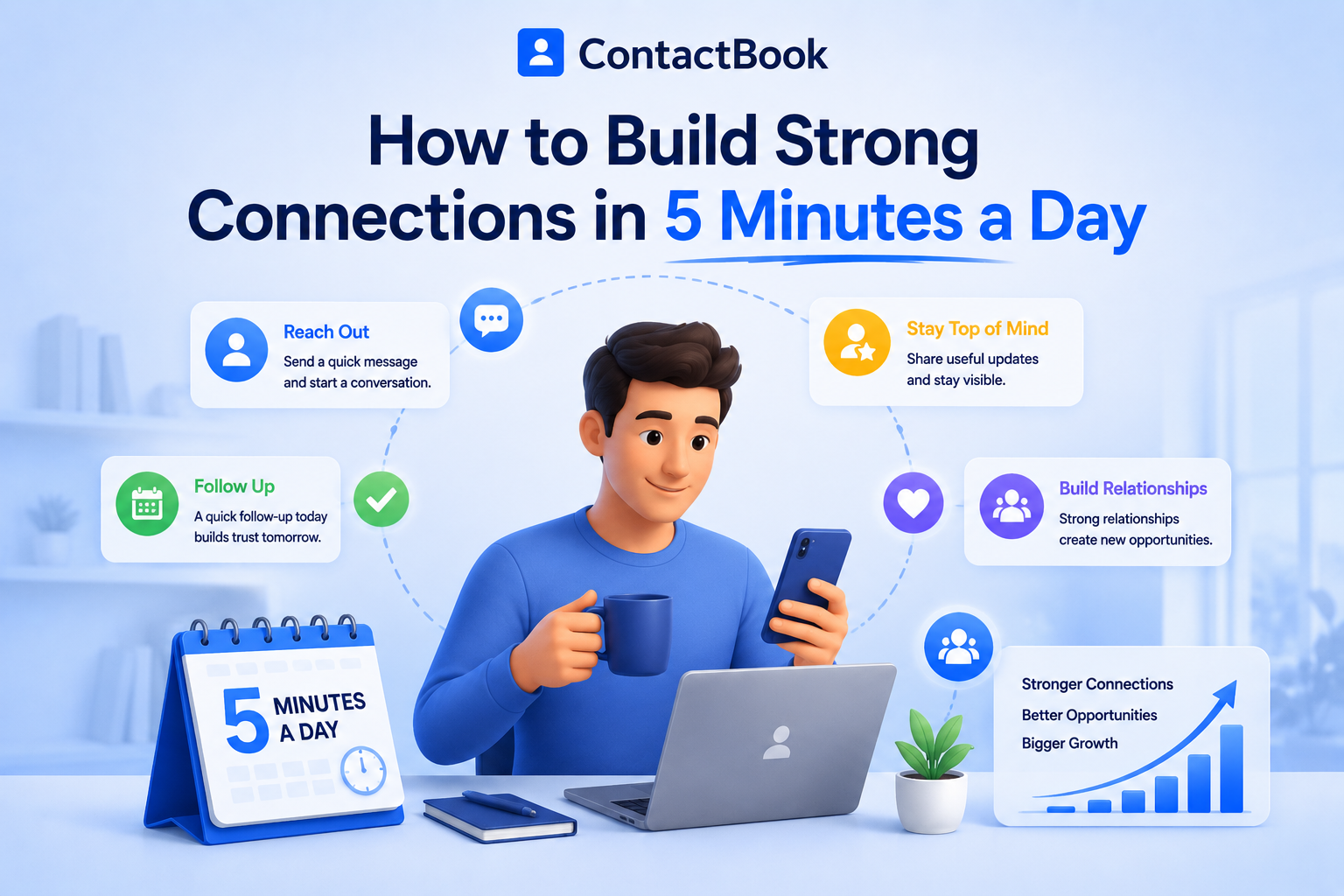
Building strong connections does not always require long meetings, daily calls, or hours of networking. In reality, many valuable professional relationships are built through small, thoughtful actions repeated consistently.
Just five minutes a day can help you stay visible, follow up with the right people, and strengthen your professional network over time. The key is not to contact everyone every day. The key is to make one meaningful move daily.
Most people only think about networking when they need something — a job, client, referral, introduction, or business opportunity. But strong connections are built before you need help. They grow through regular communication, trust, and small moments of value.
Whether you are a business owner, salesperson, recruiter, freelancer, real estate professional, consultant, student, or working professional, a simple five-minute habit can help you build better business relationships without feeling overwhelmed.
Why Strong Connections Matter
Your professional network can directly impact your career and business growth. Strong connections can lead to referrals, partnerships, clients, mentorship, collaborations, job opportunities, and useful advice.
But a strong connection is not just someone saved in your phone or added on LinkedIn. A strong connection is someone who remembers you, trusts you, and sees value in staying connected with you.
This is why relationship management matters. If you do not stay in touch, even valuable contacts can become inactive. A short message, quick follow-up, helpful resource, or thoughtful comment can keep a relationship alive.
In 2026, professionals do not need more random contacts. They need better-managed relationships.
The Power of Five Minutes a Day
Five minutes may sound too short to make a difference, but it is enough to take one useful networking action every day.
In five minutes, you can send a follow-up message, comment on someone’s post, update a contact note, set a reminder, thank a client, reconnect with an old colleague, or share a useful resource.
The real power is consistency. Five minutes a day becomes more than two hours of relationship-building every month. Over a year, that small habit can create stronger professional connections, better follow-ups, more referrals, and new opportunities.
Instead of waiting for a big networking event, you can build your network through small daily actions.
Start With One Important Contact
The easiest way to build strong connections is to focus on one person each day. This keeps networking simple and realistic.
That person could be a former colleague, client, mentor, vendor, referral partner, lead, recruiter, or someone you recently met at an event. Instead of scrolling through your entire contact list and feeling overwhelmed, choose one relevant contact and take one small action.
You might send a short message, comment on their LinkedIn post, share something useful, or update their contact details. A meaningful action for one person is far more powerful than generic outreach to many people.
This habit also prevents important contacts from being forgotten. Many relationships fade not because people stop caring, but because they stop communicating.
Use Relationship Signals to Reach Out at the Right Time
Here is something very few people use properly: relationship signals.
A relationship signal is any small update that gives you a natural reason to reconnect with someone. It could be a job change, promotion, company announcement, new project, hiring post, event appearance, product launch, award, birthday, work anniversary, or even a recent post about a challenge they are facing.
Most people follow up randomly with messages like “Just checking in” or “Hope you are doing well.” These messages are not wrong, but they can feel generic.
A signal-based message feels more personal because it connects to something happening in the other person’s world.
For example:
Hi Riya, I saw your team just launched the new product. Congratulations! I remember you mentioned this was a big focus last quarter. Hope the launch went well.
This message feels thoughtful because it shows attention. You are not forcing a conversation. You are responding to a real moment.
Smart networkers do not follow up only based on their own schedule. They follow up based on the other person’s context.
Keep Notes So Every Conversation Feels Personal
A common networking mistake is forgetting important details. You may meet someone, have a great conversation, and then forget what you discussed a few days later.
Keeping notes helps you avoid that problem. After an important conversation, write down where you met, what you discussed, what the person cares about, and whether there is any next step.
For example:
Met at real estate networking event. Interested in contact sharing for broker team. Follow up next Friday.
These small notes make future conversations much better. Instead of sending a generic message, you can refer to something specific. This makes people feel remembered.
Strong connections are often built on small details. When you remember what matters to someone, you stand out.
Follow Up Before the Relationship Goes Cold
Many professional relationships fade because people forget to follow up. A great first conversation is useful, but without follow-up, it often leads nowhere.
Following up does not need to feel awkward. You can send a short message, share a useful link, ask a relevant question, or simply congratulate someone on a recent update.
The key is timing. Follow up while the relationship is still warm. For a new contact, this may mean within a few days. For an existing relationship, it may mean checking in every few weeks or months.
A lead may not be ready today, but they may be ready later. A client may not need your service now, but they may refer someone in the future. A recruiter may not have the right role today, but they may remember you when something opens up.
Consistent follow-up keeps you visible and trusted.
Stay Visible Without Being Pushy
You do not need to message people constantly to build strong connections. Sometimes, staying visible is enough.
Social media, especially LinkedIn, can help you maintain professional relationships in a natural way. Comment thoughtfully on posts, congratulate people on achievements, share useful insights, and engage with industry conversations.
A meaningful comment is better than a generic “Great post.” Add a thought, question, or takeaway. This helps people remember your name and see your perspective.
Staying visible makes future conversations easier. When you eventually send a message, it does not feel random because the person has already seen you engaging.
Keep Your Contact List Organized
Building strong connections is much harder when your contacts are scattered across phones, inboxes, spreadsheets, business cards, and social media accounts.
A messy contact list makes it difficult to remember who someone is, when you last spoke, what you discussed, or when you should follow up.
Good contact management helps you organize people by relationship type, interest, priority, location, or business need. It also helps you avoid duplicates, update contact details, and find the right person quickly.
A clean contact database is not just about storage. It is about making relationships easier to manage.
How ContactBook Helps You Build Strong Connections
ContactBook helps you manage professional contacts in one place so you can build stronger relationships with less effort.
With ContactBook, you can store contacts centrally, create groups, add tags, save notes, set reminders, and share contact groups with your team. This makes it easier to remember important details, follow up on time, and manage relationships across clients, leads, vendors, partners, candidates, donors, students, patients, or referral sources.
For teams, ContactBook is especially useful because contacts do not stay locked inside individual phones or inboxes. Shared contact groups help everyone access the right information when they need it.
Instead of letting valuable relationships fade away, ContactBook helps you stay organized, consistent, and connected.
Final Thoughts
Building strong connections does not require hours of networking every day. It starts with small, intentional actions.
Choose one contact. Look for a relationship signal. Send a thoughtful message. Share something useful. Add a note. Set a reminder. Follow up before the connection goes cold.
When you repeat these habits consistently, your professional network becomes stronger and more valuable.
In business and career growth, relationships matter. And with the right system, even five minutes a day can help you build connections that last.

.png)


.svg)


.svg)