How to Set Contact Reminders So You Never Miss a Follow-Up Again

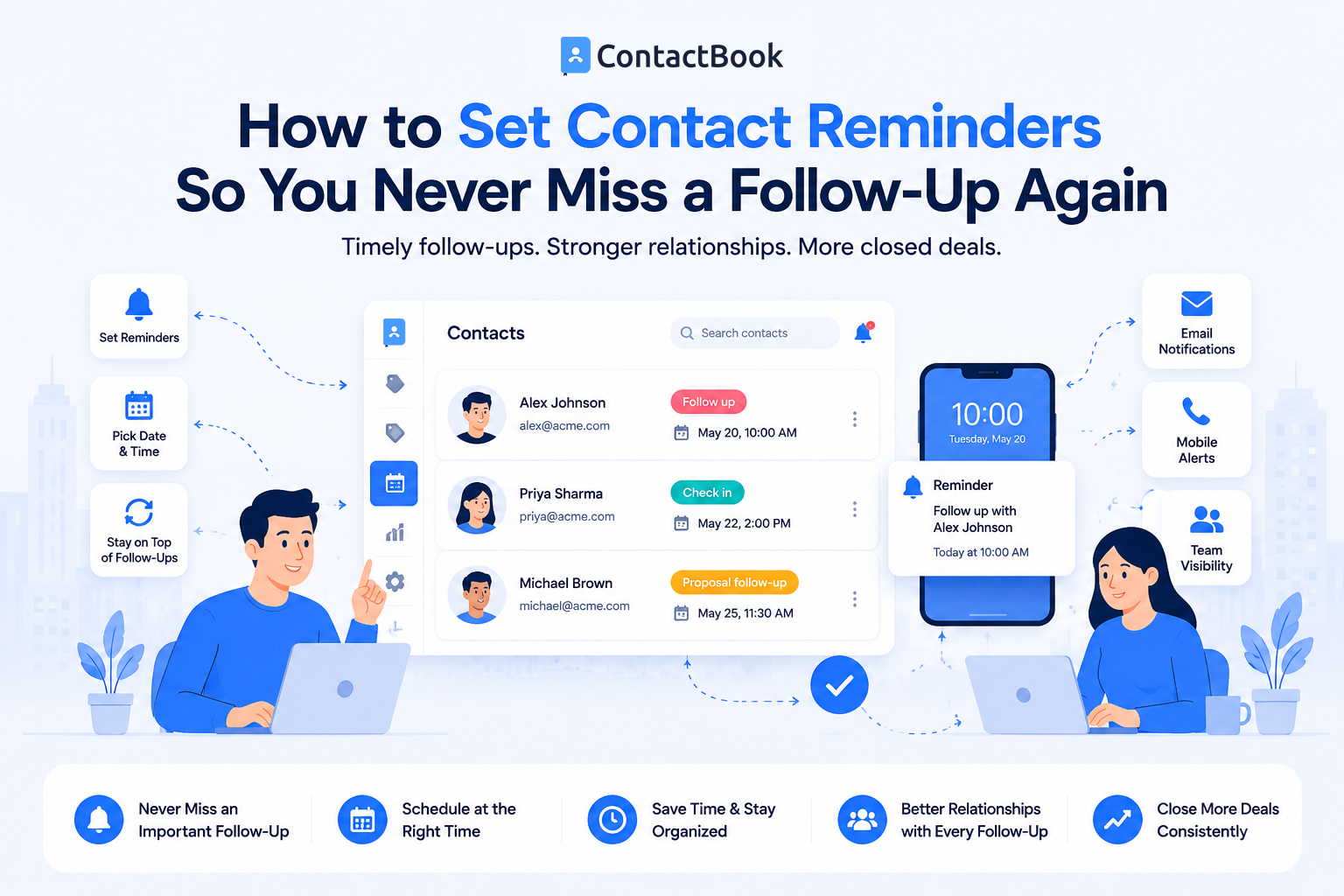
Following up at the right time can make the difference between closing a deal, keeping a customer happy, or building a valuable business relationship. Yet many professionals still rely on memory, sticky notes, spreadsheets, or scattered calendar entries to remember when they should reconnect with someone. As contact lists grow, this approach quickly becomes unreliable.
Missed follow-ups don't just affect sales. They can impact customer support, recruiting, networking, vendor relationships, and internal collaboration. Fortunately, a simple contact reminder system can help you stay organized and ensure important conversations never fall through the cracks.
In this guide, you'll learn why contact reminders matter, how to set up an effective follow-up process, and how ContactBook can help your team manage important business relationships more efficiently.
What Are Contact Reminders?
Contact reminders are scheduled notifications that prompt you or your team to reconnect with a specific person at the right time.
Instead of relying on memory, reminders help you remember tasks such as calling a prospect, checking in with a client, following up after a meeting, renewing a partnership, or reviewing an important business relationship.
Why Follow-Ups Matter
Most business relationships require ongoing communication.
A timely follow-up shows professionalism, builds trust, and keeps conversations moving forward. Whether you're nurturing a sales lead or maintaining a long-term client relationship, consistency is essential.
Why Businesses Miss Follow-Ups
Many organizations don't have a structured follow-up process.
Employees often keep reminders in personal calendars, notebooks, emails, or spreadsheets. When information is scattered across multiple tools, it's easy for important tasks to be forgotten.
Benefits of Setting Contact Reminders
A reliable reminder system improves productivity and helps teams maintain stronger business relationships.
Respond at the Right Time
Timing plays an important role in business communication.
A reminder ensures you reach out when promised instead of remembering weeks later, helping you build credibility and trust.
Improve Team Accountability
Shared reminders make it clear who is responsible for each follow-up.
This reduces confusion, prevents duplicate outreach, and ensures no important contact is overlooked.
Build Stronger Relationships
Regular communication demonstrates that you value the relationship.
Simple follow-ups after meetings, projects, or introductions help strengthen connections and increase the likelihood of future business opportunities.
Best Practices for Setting Contact Reminders
A reminder is only useful if it supports a consistent workflow. These best practices can help your team stay organized.
Set Reminders Immediately
After speaking with a customer, partner, or prospect, schedule the next follow-up before moving on to your next task.
Waiting until later increases the chance that you'll forget.
Include Context
A reminder should include enough information to help you continue the conversation.
For example, note why you're following up, what was discussed previously, or what action needs to be taken next.
Prioritize Important Contacts
Not every contact needs the same level of attention.
Create a process for identifying high-priority customers, key partners, or active opportunities so your team focuses on the relationships that matter most.
Review Reminders Daily
Make reviewing upcoming reminders part of your daily routine.
Checking scheduled follow-ups each morning helps ensure nothing important is missed.
Common Follow-Up Scenarios
Almost every department benefits from structured contact reminders.
Sales Teams
Sales professionals use reminders to follow up after product demos, proposals, networking events, and customer inquiries. Consistent communication helps keep opportunities moving through the sales process.
Customer Success Teams
Support and account management teams schedule regular check-ins, onboarding calls, renewal discussions, and customer satisfaction follow-ups to maintain long-term relationships.
Recruiters
Recruiters use reminders to reconnect with candidates, schedule interviews, check application progress, and maintain relationships with promising talent for future openings.
Business Networking
Professionals often meet valuable contacts at conferences, webinars, trade shows, and networking events. Contact reminders ensure those new connections don't fade away after the initial conversation.
How ContactBook Helps You Stay Connected
ContactBook helps businesses organize contact information in one centralized location, making it easier to manage ongoing relationships across teams. Contacts can be grouped by customer type, department, project, or other custom categories, ensuring employees always have access to the latest business information.
When combined with your preferred task management or calendar workflow, ContactBook serves as a reliable, centralized contact database that helps teams quickly find the right people to follow up with. Instead of searching through spreadsheets or personal address books, employees can access organized contact information and maintain stronger business relationships.
Common Mistakes
One common mistake is relying entirely on memory to remember follow-ups. Even experienced professionals can overlook important conversations during busy periods.
Another mistake is keeping reminders in personal notebooks or private calendars that other team members cannot access. This creates challenges when responsibilities change or employees are unavailable.
Businesses should also avoid scheduling reminders without context. Including a brief note about the previous conversation helps make future follow-ups more relevant and productive.
Frequently Asked Questions
What are contact reminders?
Contact reminders are scheduled notifications that remind you to reconnect with customers, clients, vendors, candidates, or business partners at a specific time.
Why are follow-up reminders important?
Follow-up reminders help businesses maintain consistent communication, improve customer relationships, reduce missed opportunities, and ensure important conversations continue as planned.
Can contact management software help with follow-ups?
Yes. Contact management software centralizes contact information, making it easier to organize relationships and quickly find the right contact when it's time to follow up. Many businesses also integrate their contact management process with calendars or task management tools to schedule reminders efficiently.
Final Thoughts
Strong business relationships aren't built through a single conversation—they grow through consistent and timely follow-ups. Without a reliable reminder system, even valuable opportunities can be forgotten as workloads increase.
Creating a structured follow-up process helps teams stay organized, communicate more consistently, and build greater trust with customers, partners, and prospects. Whether you're managing sales opportunities, recruiting candidates, or maintaining professional relationships, contact reminders ensure every important connection gets the attention it deserves.
ContactBook makes this process easier by giving teams a centralized place to organize and access business contacts. Combined with your preferred reminder or task management tools, it helps create an efficient workflow that keeps relationships organized and ensures your team is always ready for the next conversation.

.png)


.svg)


.svg)