What Is Contact Management Software? (And When You Need It)

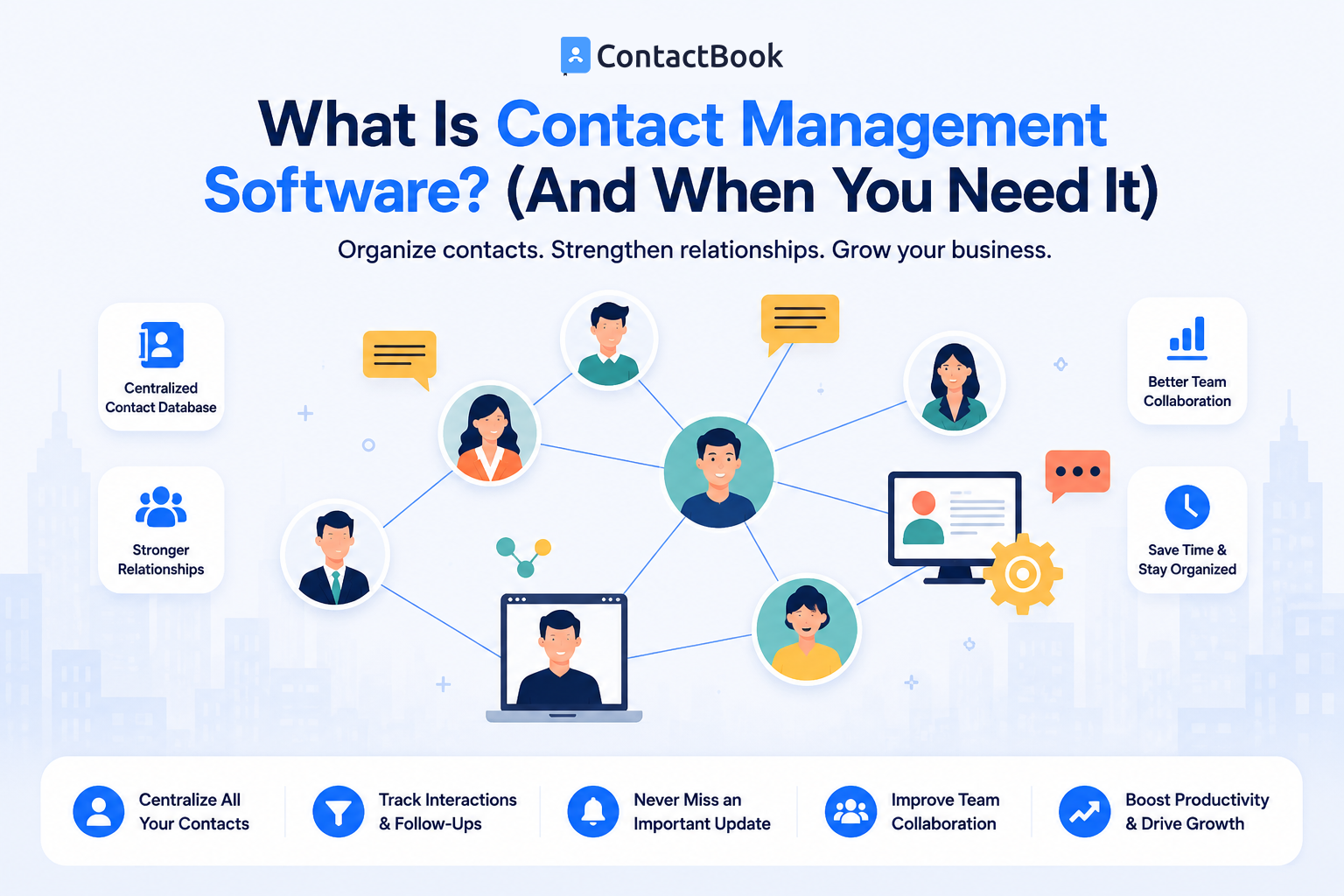
Every business depends on strong relationships. Whether you're communicating with customers, clients, vendors, partners, job candidates, or employees, having quick access to accurate contact information is essential. As businesses grow, however, keeping track of hundreds or even thousands of contacts becomes increasingly difficult.
Many organizations start with spreadsheets, personal phone contacts, or email address books. These methods may work for a while, but they often lead to duplicate records, outdated information, and communication delays as teams expand.
This is where contact management software becomes valuable. It helps businesses organize, store, update, and share contact information from one centralized location, making collaboration easier and improving day-to-day operations.
In this guide, you'll learn what contact management software is, how it works, when your business needs it, and why it can be a smarter alternative to spreadsheets or personal contact lists.
What Is Contact Management Software?
Contact management software is a digital tool that helps individuals and businesses organize, manage, and access contact information in one centralized database.
Instead of storing contacts across spreadsheets, email accounts, or personal phones, all business contacts are kept in one place where authorized users can quickly search, update, and share information.
What Information Can It Store?
A contact management system typically stores names, phone numbers, email addresses, company names, job titles, office locations, and notes.
Many platforms also allow businesses to organize contacts using groups, tags, departments, categories, or custom fields, making it easier to find the right contact when needed.
Who Uses Contact Management Software?
Contact management software is useful for businesses of all sizes.
Sales teams, customer support departments, digital agencies, recruiters, healthcare organizations, real estate agencies, consultants, nonprofit organizations, and small businesses all benefit from having organized and accessible business contacts.
How Contact Management Software Works
The goal of contact management software is simple: create one reliable source of contact information that everyone can trust.
Instead of maintaining multiple versions of the same contact list, authorized users work from one centralized database.
Centralized Contact Storage
All business contacts are stored in one secure location.
This reduces duplicate records and ensures employees always have access to the latest contact information.
Shared Contact Lists
Many contact management platforms allow teams to create shared contact lists.
Instead of sending spreadsheets back and forth, employees can access the same updated contact database from wherever they work.
Easy Search and Organization
As contact databases grow, finding information quickly becomes increasingly important.
Dedicated contact management software includes search, filtering, groups, and categories that make locating contacts much faster than scrolling through spreadsheets.
Benefits of Contact Management Software
The right contact management solution improves productivity while making collaboration easier across the organization.
Saves Time
Employees spend less time searching for phone numbers, email addresses, or customer details.
Quick access to organized contact information allows teams to focus on more valuable work.
Improves Team Collaboration
When everyone works from the same contact database, communication becomes more consistent.
Shared contact lists reduce duplicate records and eliminate confusion caused by multiple versions of the same information.
Keeps Information Up to Date
Contact details change regularly.
Centralized contact management makes updates immediately available to authorized users, helping teams work with accurate information.
Supports Business Continuity
Important customer and vendor relationships remain accessible even if employees change roles or leave the organization.
This protects valuable business relationships and reduces operational risk.
When Do You Need Contact Management Software?
Not every business needs contact management software immediately.
However, several signs indicate that it's time to move beyond spreadsheets or personal address books.
Your Team Shares Contacts
If multiple employees regularly communicate with the same customers, clients, or vendors, shared contact management becomes essential.
Centralized access improves collaboration and prevents duplicate work.
Your Contact List Is Growing
Managing a few dozen contacts manually is manageable.
Managing hundreds or thousands of contacts becomes much more difficult without dedicated organization tools.
Employees Use Different Contact Lists
If customer information exists in multiple spreadsheets, email accounts, or personal phones, employees may not know which version is correct.
Contact management software creates one trusted source of information.
Employee Turnover Creates Problems
If valuable business contacts leave with employees, your organization needs a centralized contact management system.
Business relationships should remain with the company, not individual devices or personal accounts.
Contact Management Software vs. CRM
Many people confuse contact management software with Customer Relationship Management (CRM) software, but they are not the same.
Why Businesses Choose ContactBook
ContactBook is designed specifically for businesses that need better contact organization without the complexity of traditional CRM software.
It allows teams to create shared contact lists, organize contacts into custom groups, centralize business directories, and manage access through user permissions. Instead of relying on spreadsheets or disconnected address books, employees always have access to accurate and organized business contact information.
Whether you're managing customers, vendors, partners, recruiters, healthcare professionals, or internal teams, ContactBook helps simplify contact management and improve collaboration across the organization.
Common Mistakes
One common mistake is waiting too long to organize business contacts. As databases grow, migrating scattered information becomes more difficult and time-consuming.
Another mistake is confusing contact management software with CRM software. Businesses that only need shared contact management may end up paying for features they rarely use.
Finally, many organizations underestimate the cost of poor contact organization. Lost time, duplicate records, and missed communication opportunities often have a much greater impact than the cost of dedicated software.
Frequently Asked Questions
What is contact management software?
Contact management software is a tool that helps businesses organize, store, update, and share contact information from one centralized location, making it easier for teams to access accurate business contacts.
What is the difference between contact management software and CRM?
Contact management software focuses on organizing contacts, while CRM software includes additional features such as sales tracking, lead management, customer support, and marketing automation.
Who should use contact management software?
Any business that manages customer, vendor, partner, employee, or client contacts can benefit from contact management software, especially when multiple team members need access to the same contact information.
Final Thoughts
As businesses grow, managing contacts through spreadsheets and personal address books becomes increasingly inefficient. Contact management software provides a centralized, organized, and collaborative way to manage business relationships while reducing manual work and improving communication.
Whether you're a small business building your first customer database or a growing organization managing thousands of contacts, investing in the right contact management solution helps your team stay organized and productive.
For businesses looking for a simple yet powerful way to centralize business contacts, ContactBook offers an easy-to-use platform designed specifically for shared contact management. By giving teams one trusted source of contact information, ContactBook helps organizations build stronger relationships and work more efficiently every day.

.png)


.svg)


.svg)