Who Owns Your Company's Contacts When an Employee Quits?

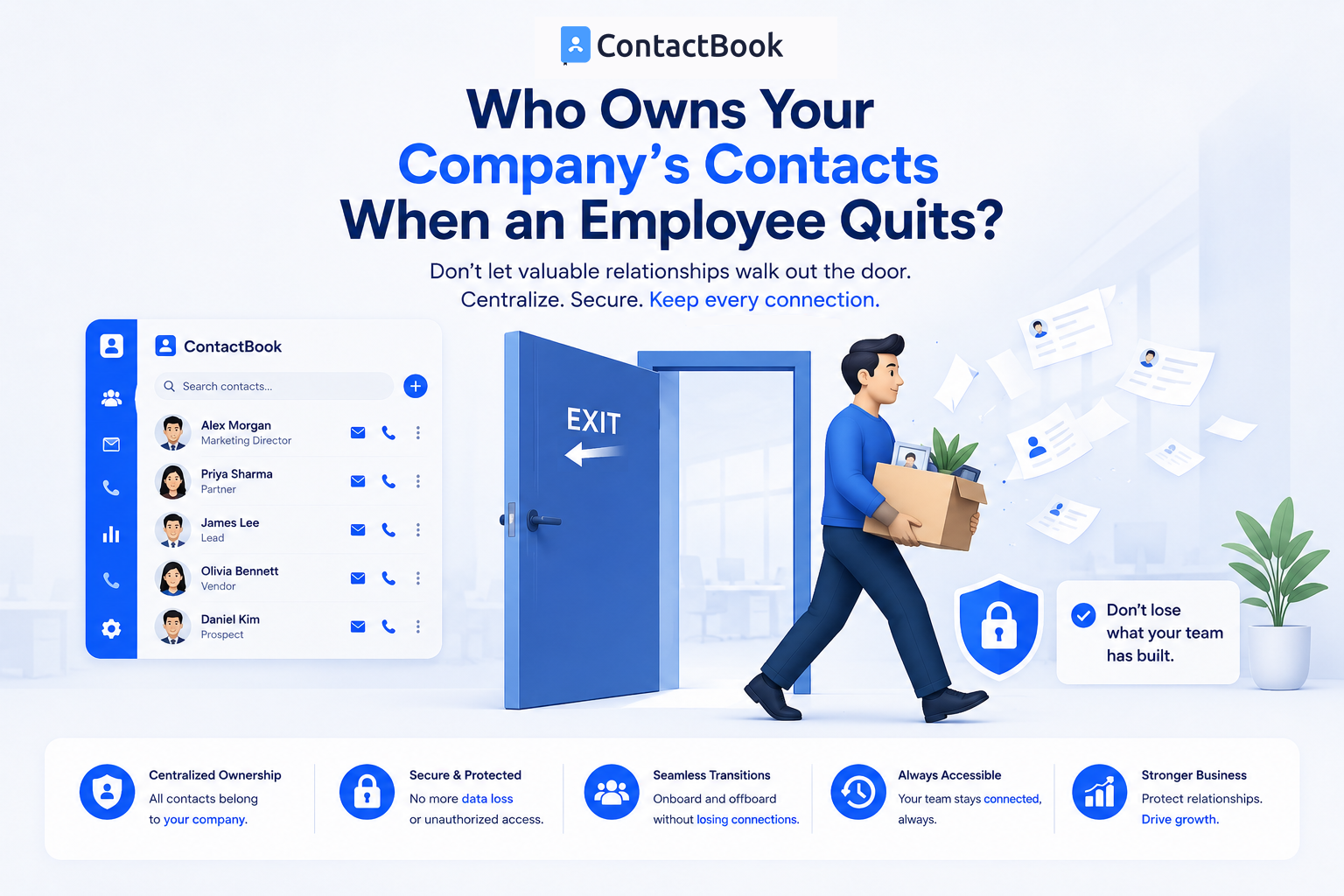
Employees build valuable relationships every day. Sales representatives connect with prospects, account managers work closely with clients, recruiters build candidate networks, and support teams communicate with customers and vendors. Over time, these relationships become one of a company's most valuable business assets.
But what happens when an employee leaves? Who owns the contacts they've collected over months or years of work? If those contacts are stored only on a personal phone, email account, or private address book, the answer may not be as straightforward as many businesses expect.
The issue isn't just about ownership—it's about business continuity. Companies need systems and policies that ensure important business contacts remain accessible, organized, and available to authorized team members even when employees change roles or leave the organization.
In this article, we'll explore the difference between contact ownership and contact management, the risks of relying on personal contact lists, and how centralized contact management helps businesses protect valuable relationships.
Note: This article provides general business guidance, not legal advice. Laws regarding data ownership, employment agreements, privacy, and intellectual property vary by country and jurisdiction. Businesses should consult qualified legal professionals for advice specific to their situation.
Why Business Contacts Are Valuable Assets
Business contacts represent more than names, phone numbers, and email addresses. They are the foundation of customer relationships, partnerships, supplier networks, and future business opportunities.
Losing access to these contacts can interrupt communication, delay projects, and make it harder to maintain long-term relationships.
Contacts Support Daily Operations
Every department relies on accurate contact information.
Sales teams communicate with prospects, customer success teams support clients, HR teams work with candidates, and finance departments coordinate with vendors. Easy access to business contacts keeps operations running smoothly.
Relationships Continue Beyond Individual Employees
While employees help build relationships, many of those relationships are established on behalf of the company.
When contacts remain accessible to the organization, projects can continue without disruption even if team members leave or change responsibilities.
The Risks of Storing Contacts on Personal Devices
Many businesses unintentionally create risks by allowing employees to manage important contacts only on personal devices or within individual accounts.
This approach may seem convenient, but it often creates problems when staff turnover occurs.
Important Contacts Become Difficult to Access
If client or vendor information exists only on one employee's phone or personal address book, the company may struggle to locate important contacts after that employee leaves.
This can delay customer communication and affect service quality.
Knowledge Leaves with the Employee
Contact details are only part of the picture.
Employees often remember important context about relationships, preferred communication methods, and previous conversations. Without a shared system, this knowledge may be lost when they leave.
Business Continuity Is Affected
Unexpected resignations, extended leave, or role changes can interrupt communication if no one else has access to key business contacts.
A centralized contact management process helps reduce this risk.
Who Should Own Business Contacts?
From an operational perspective, business contacts should be managed as organizational assets rather than personal collections.
This doesn't diminish the value employees bring to relationship building. Instead, it ensures the company can continue serving customers and partners regardless of staffing changes.
Create Shared Ownership
Rather than assigning important contacts to one individual, businesses should make appropriate contact information available to authorized team members who need it for their work.
This improves collaboration and reduces dependency on any single employee.
Establish Clear Policies
Companies should define how business contacts are collected, stored, updated, and shared.
Clear internal policies help employees understand where business contact information should be maintained and who can access it.
Keep Contact Information Centralized
Using a centralized contact management platform ensures everyone works from the same accurate and up-to-date contact database.
This supports smoother transitions when responsibilities change.
Why Centralized Contact Management Is the Best Solution
A centralized contact management system helps businesses protect valuable relationships while improving collaboration across teams.
One Trusted Source of Information
Instead of storing contacts across multiple phones, spreadsheets, and email accounts, businesses maintain one secure location for approved business contacts.
This reduces duplicate records and improves data consistency.
Easier Employee Transitions
When an employee leaves, authorized coworkers can continue communicating with customers, suppliers, and partners using the existing contact database.
Projects continue with minimal disruption because important information remains available.
Better Team Collaboration
Shared contact management allows multiple employees to access accurate contact information without maintaining separate address books.
Everyone works from the same reliable source of business contacts.
How ContactBook Helps Businesses Protect Business Relationships
ContactBook gives organizations a centralized platform to manage shared business contacts across departments and teams. Instead of relying on personal devices or disconnected spreadsheets, businesses can organize client, vendor, partner, and internal contacts in one secure location with controlled access.
Teams can create shared contact lists, organize contacts into groups, assign appropriate permissions, and ensure important business relationships remain accessible even as employees join, change roles, or leave the organization.
By centralizing business contact information, ContactBook helps companies improve collaboration, reduce operational risk, and maintain continuity during employee transitions.
Common Mistakes
One common mistake is assuming that business contacts will naturally remain available after an employee leaves. Without a centralized system, important information may be scattered across personal devices and individual accounts.
Another mistake is relying on spreadsheets as the primary contact database. As organizations grow, spreadsheets become harder to maintain and often result in duplicate or outdated records.
Businesses should also avoid treating contact management as an afterthought. Establishing clear processes and using dedicated contact management software helps protect valuable relationships before problems occur.
Frequently Asked Questions
Who owns company contacts when an employee quits?
The answer depends on employment agreements, company policies, applicable laws, and the specific circumstances. From an operational perspective, businesses should maintain important business contacts in centralized systems so authorized teams can continue serving customers without disruption.
Why shouldn't business contacts be stored only on personal devices?
Personal devices limit team access, create business continuity risks, and make it more difficult to maintain customer relationships when employees leave or change roles.
How can businesses protect important customer contacts?
Businesses can centralize contact information using dedicated contact management software, establish clear internal policies, and ensure authorized employees have access to shared business contact lists.
Final Thoughts
Employees play a vital role in building customer relationships, but businesses should also ensure those relationships remain accessible to the organization. When important contacts exist only on personal phones or individual accounts, employee turnover can create unnecessary disruptions and operational risks.
A centralized contact management strategy helps businesses maintain continuity by keeping client, vendor, and partner information organized, secure, and available to the right team members. This not only supports smoother employee transitions but also strengthens collaboration and protects valuable business relationships over the long term.
For organizations looking to improve how they manage shared business contacts, ContactBook provides a practical solution for organizing, sharing, and maintaining contact information across teams. With centralized contact management in place, businesses can focus on building lasting relationships without worrying about losing access to them when employees move on.

.png)


.svg)


.svg)