Why HIPAA-Conscious Healthcare Teams Need Better Contact Management

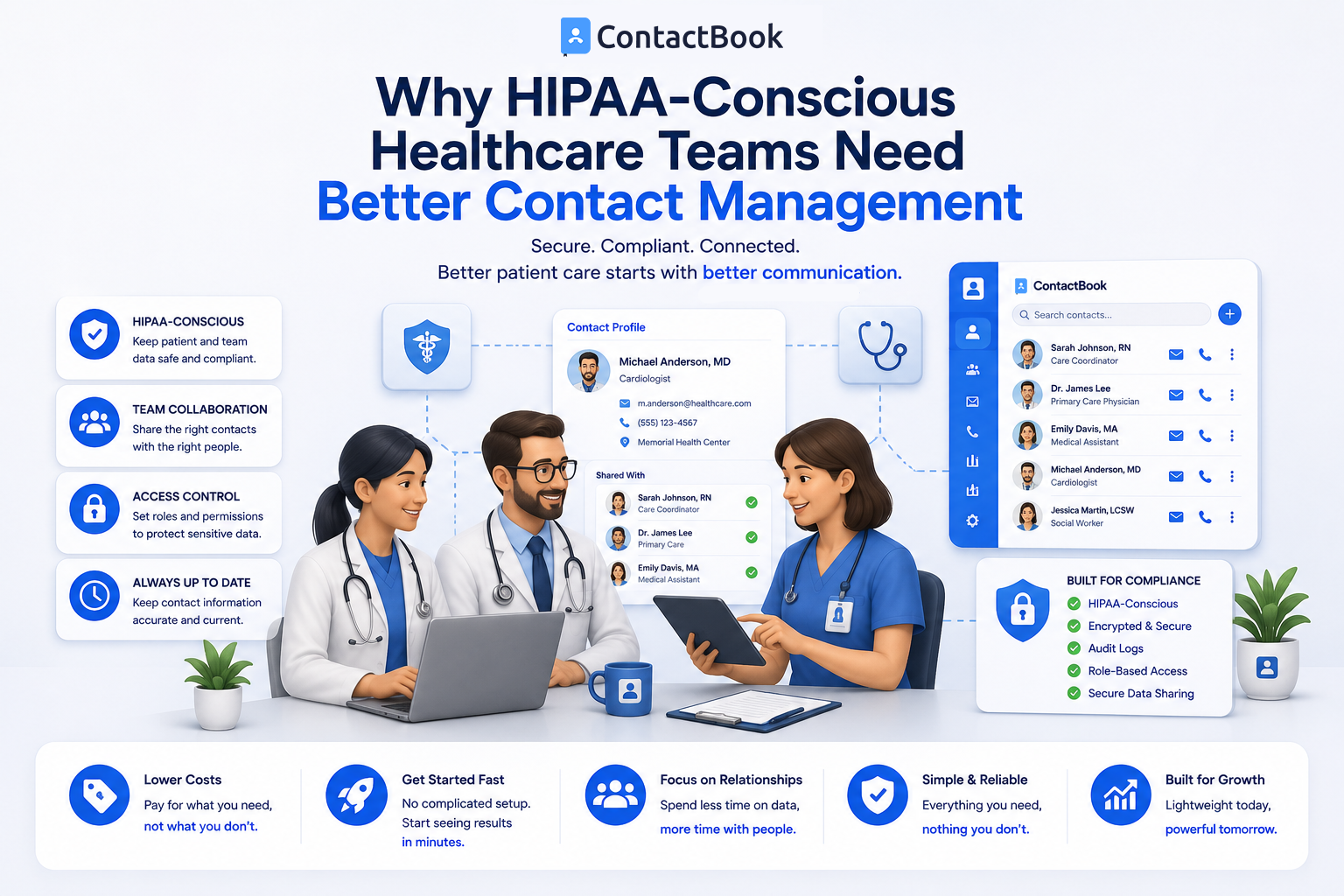
Healthcare teams handle sensitive information every day. From coordinating patient care to communicating with specialists, laboratories, pharmacies, and insurance providers, accurate contact information is essential for smooth operations. While medical records often receive the most attention, contact management is another critical area that directly affects efficiency, collaboration, and patient care.
For healthcare organizations that are HIPAA-conscious, managing business contacts securely and consistently is just as important as protecting patient information. Scattered contact lists, outdated phone numbers, and personal address books can slow communication and increase operational risks.
In this article, we'll explain why healthcare organizations need better contact management, how centralized contact access supports compliant workflows, and why a dedicated solution like ContactBook can improve team collaboration.
Note: Contact management tools should not be used to store protected health information (PHI) unless they are specifically designed and configured to meet applicable regulatory requirements, including HIPAA where applicable. This article focuses on managing business contact information and improving team communication.
What Is Contact Management in Healthcare?
Contact management in healthcare refers to organizing and maintaining business contact information in a centralized system so authorized staff can quickly reach the right people when needed.
This includes contacts for physicians, nurses, specialists, laboratories, pharmacies, insurance providers, emergency services, vendors, suppliers, administrators, and internal departments.
Why Accurate Contact Information Matters
Healthcare decisions often depend on timely communication.
When staff can immediately find the correct phone number or email address, they spend less time searching for information and more time supporting patients and coordinating care.
The Challenges of Manual Contact Lists
Many healthcare organizations still rely on spreadsheets, personal mobile phones, printed directories, or disconnected systems to store contact information.
These methods can quickly become outdated, making it difficult for staff to know whether they are using the latest contact details.
Why HIPAA-Conscious Teams Need Better Contact Management
Being HIPAA-conscious means creating processes that reduce unnecessary risk and promote secure, organized communication. While contact management is different from medical record management, poor organization can still affect operational efficiency and create avoidable challenges.
Consistent Team Communication
Healthcare teams often work across multiple departments, locations, and shifts.
A centralized contact directory ensures authorized staff members can quickly reach colleagues and external partners without relying on personal contact lists or outdated documents.
Reduced Operational Errors
Using incorrect phone numbers or outdated email addresses can delay important communication.
Maintaining one centralized contact database helps reduce confusion and improves consistency across the organization.
Better Business Continuity
Healthcare organizations cannot depend on one employee's personal device to access important business contacts.
A shared contact management platform ensures that essential business relationships remain available even when staff members are absent, change roles, or leave the organization.
How Centralized Contact Management Supports Healthcare Teams
Centralized contact management improves collaboration while helping healthcare organizations maintain organized business communication.
Faster Coordination Across Departments
Healthcare professionals regularly communicate with multiple teams throughout the day.
When contact information is organized and searchable, employees can quickly reach the right department or external partner without wasting valuable time.
Easier Staff Onboarding
New employees need immediate access to key business contacts.
A centralized contact management system allows new staff members to become productive faster by providing one reliable source for approved contact information.
Improved Collaboration Across Locations
Many healthcare organizations operate multiple clinics, offices, or facilities.
Shared contact management helps ensure employees across every location use consistent and up-to-date contact information.
Why Spreadsheets and Personal Phones Are Not Enough
As healthcare organizations grow, manual contact management becomes increasingly difficult.
Dedicated contact management software offers several advantages over traditional methods.
Better Organization
Contacts can be organized using groups, departments, specialties, locations, and custom categories.
This makes it easier for staff to quickly locate the appropriate contact during busy workdays.
Controlled Access
Not every employee requires access to every business contact.
Dedicated contact management platforms allow organizations to manage user permissions and provide access based on job responsibilities.
Easier Updates
Business contact information changes regularly.
With centralized contact management, updates are made once and become available to authorized users immediately, reducing duplicate work and outdated records.
How ContactBook Helps Healthcare Teams Stay Organized
Healthcare organizations need fast, reliable access to business contact information without relying on disconnected spreadsheets or personal address books.
ContactBook helps teams centralize business contacts, organize directories by department or role, create shared contact lists, and provide secure access for authorized employees. This improves collaboration across clinics, offices, and administrative teams while reducing the time spent searching for important contact details.
By keeping business contacts organized and easily accessible, healthcare organizations can streamline communication and support more efficient day-to-day operations.
Common Mistakes
One common mistake is storing important business contacts on personal devices. This limits accessibility and can create challenges when employees change roles or leave the organization.
Another mistake is maintaining multiple versions of the same contact directory. Duplicate spreadsheets and outdated documents often lead to inconsistent communication and unnecessary delays.
Healthcare organizations should also establish clear processes for reviewing and updating contact information regularly. Even the best contact management system depends on accurate and current business data.
Frequently Asked Questions
What is healthcare contact management?
Healthcare contact management is the process of organizing and maintaining business contact information for healthcare professionals, departments, vendors, laboratories, pharmacies, and other authorized contacts in one centralized location.
Does HIPAA apply to business contact information?
HIPAA primarily governs protected health information (PHI). General business contact information may not be PHI on its own, but organizations should evaluate how contact information is stored and used, especially if it is associated with patient information or other regulated data. Organizations should follow their legal and compliance requirements.
Why should healthcare organizations use centralized contact management?
Centralized contact management improves communication, reduces outdated information, supports collaboration across departments, and helps authorized employees quickly access important business contacts from one trusted source.
Final Thoughts
Healthcare organizations depend on fast, accurate communication every day. While protecting patient information remains a top priority, maintaining organized business contact information is also essential for efficient operations and strong collaboration.
Centralized contact management helps healthcare teams reduce confusion, improve communication, and ensure authorized staff always have access to the right business contacts. It also supports smoother onboarding, better collaboration across locations, and more consistent workflows.
For organizations looking to improve how teams manage business contacts, ContactBook provides a centralized and easy-to-use solution for organizing shared directories and keeping important contact information accessible. Combined with appropriate privacy, security, and compliance practices, better contact management can help healthcare teams communicate more effectively and focus on delivering quality care.

.png)

.svg)


.svg)