Why Poor Contact Hygiene Increases Data Breach Risks (And How to Fix It)

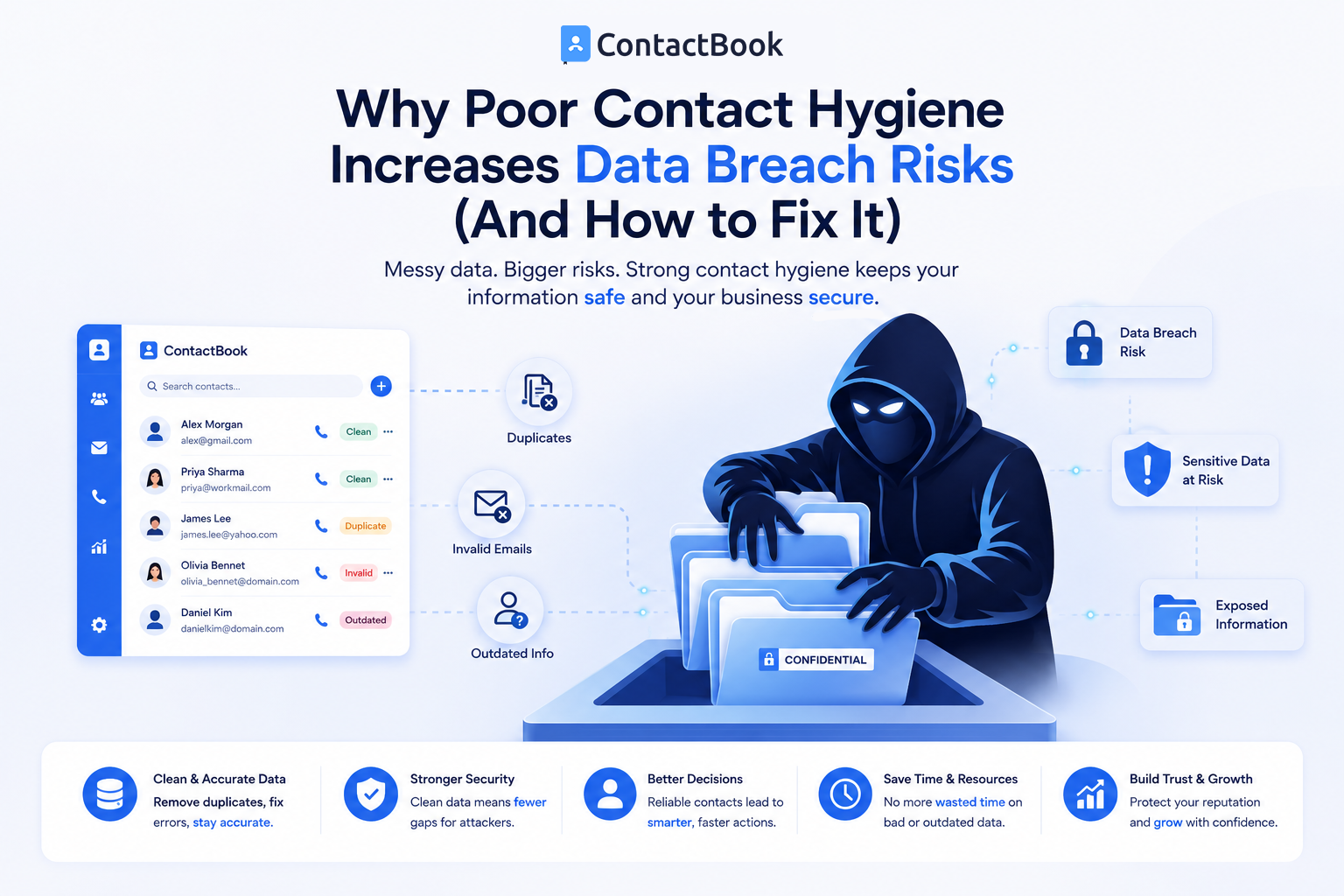
Every business relies on contact information to communicate with customers, clients, vendors, partners, and employees. Over time, these contact databases grow, and without regular maintenance, they become cluttered with duplicate entries, outdated information, inactive contacts, and inconsistent records. This problem is known as poor contact hygiene.
Many businesses view contact hygiene as an organizational issue, but it is also a security concern. Disorganized contact data can make it harder to control access, identify outdated records, and respond to security incidents. While poor contact hygiene doesn't directly cause a data breach, it can increase the risk of unnecessary data exposure and make security management more difficult.
In this article, you'll learn what contact hygiene is, how poor contact management can contribute to security risks, and the best practices for keeping your business contact database clean, organized, and secure.
What Is Contact Hygiene?
Contact hygiene is the process of keeping business contact information accurate, organized, up to date, and free from unnecessary or duplicate records.
Good contact hygiene ensures employees always work with reliable information while making it easier to manage business relationships and control access to contact data.
What Does Good Contact Hygiene Include?
A healthy contact database typically includes verified contact details, consistent formatting, clearly organized groups, and the removal of duplicate or outdated records.
It also involves regularly reviewing contact information to ensure it remains relevant to current business operations.
Why Contact Hygiene Matters
As businesses grow, contact databases become larger and more complex.
Without regular maintenance, employees may struggle to find accurate information, leading to reduced productivity, communication errors, and increased administrative work.
How Poor Contact Hygiene Can Increase Security Risks
Poor contact hygiene doesn't automatically result in a data breach, but it can create conditions that make data management and security more challenging.
Outdated Contacts Increase Unnecessary Data Exposure
Businesses often retain contact records that are no longer needed.
Keeping outdated vendor, employee, or partner contacts in shared systems increases the amount of information being stored and may make it harder to manage access appropriately.
Regularly reviewing and removing unnecessary records supports better data governance.
Duplicate Records Make Access Harder to Manage
Duplicate contacts often appear across multiple systems or departments.
When the same person has several different records, employees may update one record while overlooking others. This inconsistency can make it more difficult to maintain accurate information and apply security policies consistently.
Disorganized Contact Databases Reduce Visibility
Scattered contact information stored across spreadsheets, personal devices, and different applications makes it difficult to know where business information exists.
Without a centralized view, organizations may overlook outdated records or fail to apply consistent security practices across all contact data.
Shared Spreadsheets Create Additional Risks
Many businesses continue to manage contacts using spreadsheets that are emailed or shared between employees.
Multiple copies increase the chance of outdated information circulating and make it harder to control who has access to business contacts.
Best Practices for Better Contact Hygiene
Maintaining a clean contact database improves both business efficiency and overall data management.
Centralize Business Contacts
Store business contacts in one trusted location instead of spreading information across spreadsheets, email accounts, and personal devices.
A centralized contact management system makes updates easier while improving consistency across teams.
Review Contact Records Regularly
Schedule periodic reviews to identify duplicate, outdated, or unnecessary contacts.
Removing inactive records helps keep the database organized and reduces administrative overhead.
Control Access to Contact Information
Not every employee needs access to every contact.
Assign appropriate permissions based on job responsibilities so employees can access the information they need without exposing unnecessary data.
Standardize Contact Information
Use consistent naming conventions, categories, groups, and formatting throughout the contact database.
Standardization improves search accuracy and helps employees quickly locate the correct contact information.
How Dedicated Contact Management Supports Better Data Governance
A dedicated contact management platform helps businesses maintain cleaner and more organized contact information while supporting consistent internal processes.
One Reliable Source of Truth
Centralized contact management reduces duplicate records by providing one shared database for authorized employees.
This improves consistency and makes ongoing maintenance much easier.
Easier Collaboration
Teams work more efficiently when everyone accesses the same updated contact information.
Shared contact lists eliminate confusion caused by multiple versions of the same contact database.
Simplified Contact Maintenance
Dedicated contact management software makes it easier to organize contacts using groups, tags, custom fields, and search filters.
This supports regular database maintenance without relying on manual spreadsheets.
How ContactBook Helps Businesses Maintain Better Contact Hygiene
ContactBook helps organizations centralize business contacts, organize shared address books, create custom contact groups, and manage access across teams. Instead of relying on scattered spreadsheets or personal contact lists, businesses can maintain one organized contact database that supports collaboration and efficient communication.
By giving teams a centralized place to manage business contacts, ContactBook makes it easier to keep contact information accurate, remove duplicate records, and maintain better overall contact hygiene as the organization grows.
Common Mistakes
One common mistake is treating contact management as a one-time setup rather than an ongoing process. Contact information changes regularly, so databases should be reviewed and updated periodically.
Another mistake is allowing employees to maintain separate contact lists. This often creates duplicate records and inconsistent information that becomes difficult to manage over time.
Businesses also overlook the importance of removing outdated contacts. Keeping unnecessary records increases database clutter and makes ongoing maintenance more challenging.
Frequently Asked Questions
What is contact hygiene?
Contact hygiene is the practice of keeping business contact information accurate, organized, updated, and free from duplicate or unnecessary records. It helps improve productivity and supports better data management.
Can poor contact hygiene cause a data breach?
Poor contact hygiene does not directly cause a data breach. However, disorganized and outdated contact databases can make access management, data governance, and security oversight more difficult, increasing the risk of unnecessary data exposure.
How often should businesses clean their contact database?
Most businesses benefit from reviewing contact databases regularly, such as monthly or quarterly, depending on how frequently contact information changes and how large the database has become.
Final Thoughts
Good contact hygiene is about much more than keeping a contact list organized. It supports efficient communication, improves collaboration, and helps businesses manage information more responsibly. As contact databases grow, maintaining accurate and well-organized records becomes increasingly important for both productivity and operational security.
While no contact management system can prevent every security incident, maintaining clean and centralized contact information makes it easier to manage access, remove outdated records, and support stronger data governance practices.
For businesses looking to improve how they organize and maintain business contacts, ContactBook provides a centralized platform for managing shared contact lists, reducing duplicate records, and keeping important contact information accurate and accessible. Combined with good security policies and regular data reviews, better contact hygiene can contribute to a more efficient and resilient organization.

.png)


.svg)


.svg)