Why Shared Contact Lists Are Essential for Hybrid Team Communication

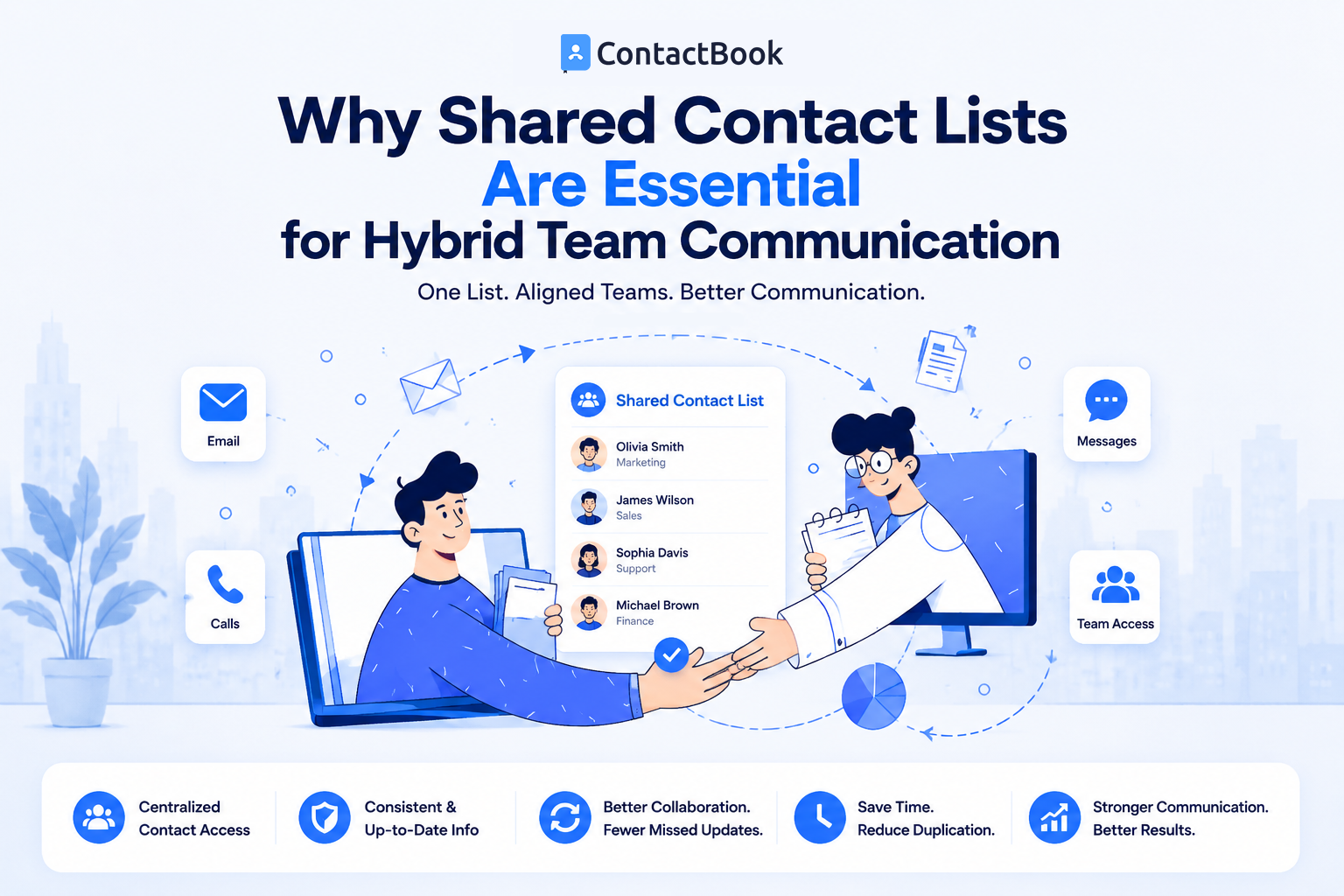
Hybrid work has become the new standard for businesses of all sizes. Employees now work from offices, homes, and even while traveling. While this flexibility improves productivity and work-life balance, it also creates new communication challenges. One of the biggest is ensuring every team member has access to the right contact information at the right time.
This is where shared contact lists become essential. Instead of storing important contacts on individual phones, spreadsheets, or personal email accounts, businesses can maintain a centralized contact database that everyone on the team can access. This improves collaboration, reduces confusion, and ensures that communication stays consistent regardless of where employees are working.
In this article, we'll explore why shared contact lists are important for hybrid teams, the business benefits they provide, and how a dedicated contact management solution like ContactBook can help organizations communicate more effectively.
What Are Shared Contact Lists?
A shared contact list is a centralized collection of business contacts that authorized team members can access, update, and use across the organization.
Rather than keeping customer, vendor, supplier, or employee contact information in separate locations, businesses store it in one secure system. This ensures everyone works with the same accurate and up-to-date information.
What Information Can Shared Contact Lists Include?
Shared contact lists can store much more than names and phone numbers. They often include email addresses, company names, job titles, departments, notes, tags, groups, and custom fields.
Having this information available in one place allows teams to quickly find the right contact without asking coworkers or searching through multiple applications.
Why Hybrid Teams Need Centralized Contact Information
Hybrid teams depend on digital collaboration. Employees may not be sitting next to each other, making it harder to share contact details when needed.
A centralized contact list removes this challenge by giving authorized employees instant access to business contacts from anywhere, helping teams stay connected and productive.
The Communication Challenges Hybrid Teams Face
As businesses adopt hybrid work models, managing contact information becomes more complex.
Without a shared system, valuable contact details often become scattered across devices, spreadsheets, and personal accounts.
Contact Information Becomes Fragmented
When every employee maintains their own contact list, the business no longer has a single source of truth.
This can lead to duplicate records, outdated phone numbers, missing email addresses, and inconsistent customer information across departments.
Employees Waste Time Searching for Contacts
Without centralized access, employees often spend valuable time asking coworkers for contact details or searching through emails and documents.
This slows communication and reduces productivity, especially when quick responses are needed.
Business Continuity Is Put at Risk
If important contacts are stored only on one employee's device, the business becomes vulnerable when that employee is unavailable, changes roles, or leaves the company.
Shared contact lists ensure critical business relationships remain accessible to the entire team.
Benefits of Shared Contact Lists for Hybrid Teams
A shared contact management system improves collaboration while helping businesses maintain accurate customer information.
Improved Team Collaboration
Every department can access the same contact information, making collaboration much easier.
Sales, customer support, marketing, finance, and management teams all work from the same database, reducing misunderstandings and duplicate communication.
Faster Customer Response
Employees don't need to search for customer information before responding.
Whether working from home or the office, team members can quickly access accurate contact details and continue conversations without unnecessary delays.
Better Data Accuracy
When updates happen in one centralized system, everyone immediately benefits from the latest information.
This reduces duplicate records and ensures employees always communicate using the most current customer details.
Increased Productivity
Hybrid employees spend less time managing contact information and more time completing meaningful work.
Instead of updating multiple spreadsheets or sharing contact details through messages, the entire organization relies on one trusted contact database.
Why Dedicated Contact Management Is Better Than Spreadsheets
Many businesses begin by sharing spreadsheets, but these quickly become difficult to maintain as teams grow.
A dedicated contact management solution offers significantly greater reliability and security.
Real-Time Updates
Unlike spreadsheets that require manual sharing, dedicated contact management platforms update information instantly.
Authorized users always see the latest contact details without downloading new versions or worrying about outdated files.
Secure Access Control
Not every employee needs access to every contact.
Dedicated contact management software allows businesses to control who can view, edit, or manage different contact lists, improving both security and compliance.
Easy Search and Organization
Businesses often manage thousands of contacts.
Dedicated platforms make it easy to organize contacts using groups, labels, categories, and custom fields so employees can quickly find exactly what they need.
How ContactBook Supports Hybrid Team Communication
As hybrid work continues to grow, businesses need reliable tools that keep teams connected regardless of location.
ContactBook provides a centralized contact management platform where businesses can create shared contact lists, organize contacts into groups, and securely share information across teams. Instead of relying on disconnected spreadsheets or personal devices, employees can access accurate contact information whenever they need it.
By keeping contact information centralized and synchronized, ContactBook helps businesses improve collaboration, reduce communication delays, and maintain stronger customer relationships.
Common Mistakes
One common mistake is allowing employees to manage business contacts only on their personal devices. This creates risks when information isn't shared with the rest of the organization.
Another mistake is continuing to rely on spreadsheets as the primary contact management system. While spreadsheets may work initially, they become increasingly difficult to maintain as businesses expand and more employees need access.
Businesses also overlook the importance of assigning clear ownership for contact updates. Even with shared contact lists, establishing processes for maintaining accurate information helps ensure long-term data quality.
Frequently Asked Questions
What is a shared contact list?
A shared contact list is a centralized collection of business contacts that multiple authorized team members can access, update, and manage. It helps ensure everyone works with accurate and consistent contact information.
Why are shared contact lists important for hybrid teams?
Hybrid teams often work from different locations. Shared contact lists provide instant access to business contacts, improve collaboration, reduce duplicate records, and help employees communicate more efficiently.
Can small businesses benefit from shared contact lists?
Yes. Small businesses often have limited resources, making efficient communication even more important. Shared contact lists help improve organization, save time, and ensure important customer information remains available to the entire team.
Final Thoughts
Hybrid work has transformed how businesses communicate, but it has also highlighted the importance of organized contact management. Without a centralized system, valuable customer and business contact information can become fragmented across devices, spreadsheets, and individual employees.
Shared contact lists solve this problem by providing one reliable source of accurate information for the entire team. They improve collaboration, speed up communication, reduce errors, and help businesses maintain continuity as teams work from multiple locations.
For organizations looking to strengthen hybrid team communication, a dedicated contact management solution like ContactBook offers a smarter alternative to scattered contact lists. By centralizing and securely sharing business contacts, companies can improve teamwork, enhance customer experiences, and build a stronger foundation for long-term growth.

.png)


.svg)


.svg)