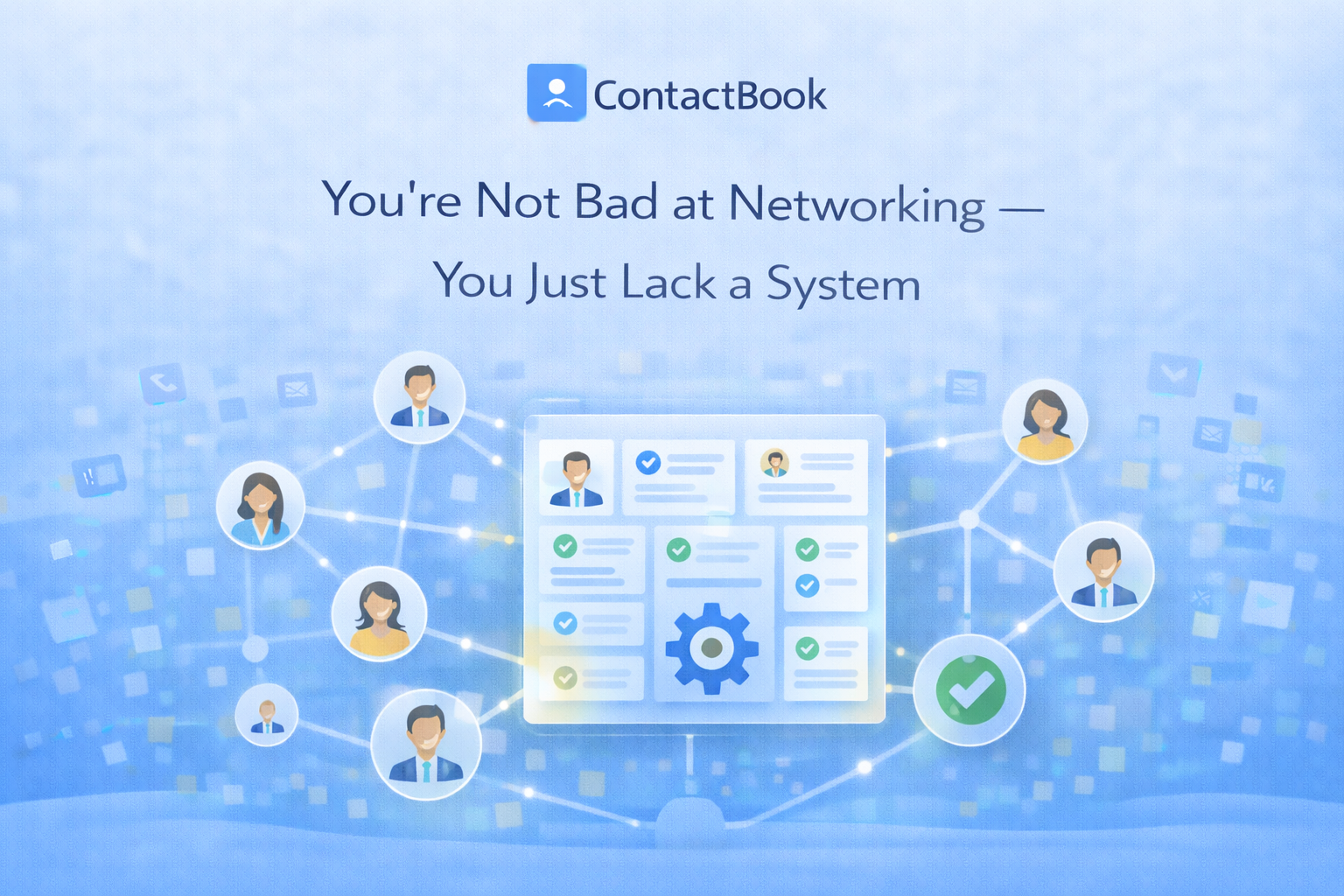
You’re Not Bad at Networking You Just Lack a System

Let’s be honest.
Networking can feel exhausting.
You meet great people. You have meaningful conversations. You exchange numbers. And then… nothing happens.
Weeks later, you realize you forgot to follow up.
That doesn’t mean you’re bad at networking.
It just means you don’t have a system.
And networking without a contact management system is like trying to build a business without a plan.
Why Networking Feels Harder Than It Should
Networking isn’t supposed to feel overwhelming. But for most professionals, it does.
1. You Meet Too Many People at Once
Events, conferences, LinkedIn connections — contacts pile up quickly.
2. There’s No Clear Follow-Up Plan
You tell yourself, “I’ll message them later.” Later rarely comes.
3. Everything Is Scattered
Some contacts are in your phone, some in email, some on WhatsApp, some on business cards.
When your contacts are scattered, networking feels chaotic. And chaos creates stress.
The Real Problem: No Contact Management System
The issue isn’t your communication skills.
It’s the lack of a structured contact management process.
1. No Central Place for Contacts
Without a single organized database, you waste time searching.
2. No Context Saved
You forget where you met, what you discussed, or what they needed.
3. No Reminder to Reconnect
Out of sight, out of mind.
A simple contact management software keeps everything organized in one place — names, notes, follow-ups, categories — so nothing slips through the cracks.
What Happens When You Rely on Memory
Memory feels reliable… until it isn’t.
1. You Forget Important Details
Names, industries, promised introductions — gone.
2. You Miss Timing
Following up too late can cost you opportunities.
3. Relationships Stay Surface-Level
Without tracking conversations, it’s hard to build depth.
Your brain isn’t built to manage hundreds (or thousands) of professional connections. That’s why organized business contact management tools exist.
How Disorganized Contacts Kill Opportunities
Opportunities rarely disappear dramatically.
They quietly fade away.
1. Missed Referrals
You forget who works where.
2. Lost Collaboration Chances
You remember someone “might” help — but can’t find their info quickly.
3. Weak Relationship Building
Inconsistent communication weakens trust.
An organized contact management system for small businesses and professionals ensures that your network actually works for you.
Why Following Up Is Where Most People Fail
Here’s the truth:
Networking success is 80% follow-up.
1. No Follow-Up Reminders
If it’s not scheduled, it won’t happen.
2. No Conversation Tracking
You don’t remember what was discussed last time.
3. No Systematic Nurturing
You only reach out when you need something.
With the right contact management tools, you can:
- Add notes immediately after meetings
- Set reminders to reconnect
- Track last communication dates
- Group contacts by priority
That’s how you stay consistent without overthinking it.
The Difference Between Collecting and Managing Contacts
Most people collect contacts.
Few people manage them.
Collecting Contacts Looks Like:
- Saving numbers
- Adding random LinkedIn connections
- Keeping business cards in a drawer
Managing Contacts Looks Like:
- Categorizing by industry or interest
- Adding context notes
- Scheduling follow-ups
- Reviewing connections regularly
If your phone has 2,000 contacts but no organization, that’s not a network.
That’s storage.
Real networking requires structured contact organization tools.
How a Simple Contact System Changes Everything
You don’t need a complicated CRM.
You need something simple and consistent.
1. Everything in One Place
A centralized contact database saves time and energy.
2. Smart Organization
Tags, groups, and filters help you find the right person instantly.
3. Built-In Follow-Up Structure
Reminders turn good intentions into real action.
Once you have a system, networking becomes easier — and surprisingly natural.
You stop worrying about forgetting people.
You start focusing on building relationships.
Turn Networking Into a Repeatable Growth Strategy
When you systemize your networking:
1. Every New Contact Gets Logged
No more “I’ll save it later.”
2. Every Conversation Gets Context
You remember what matters.
3. Every Relationship Gets Nurtured
Follow-ups become consistent, not accidental.
That’s when networking shifts from random effort to intentional growth.
Successful professionals don’t rely on memory.
They rely on structured contact management software that turns relationships into long-term opportunities.
Final Thought: It’s Not You — It’s the Lack of Structure
If networking feels inconsistent, stressful, or unproductive — it’s not your personality.
It’s your process.
The moment you build a simple, organized contact management system:
- You follow up confidently
- You stay connected effortlessly
- You spot opportunities faster
- You grow strategically
Networking isn’t about being outgoing.
It’s about being organized.
And with the right system in place, anyone can do it well.

.png)


.svg)


.svg)